Shapes Inside and Outside at the Same Time
Ruth Asawa Exhibit at MOMA, January 2026
My mother frequently quoted this phrase to us kids when we faced a challenge, “when life gives you lemons, make lemonade.” Acclaimed artist Ruth Asawa embodied this attitude. Born in California in 1926, she faced repeated discrimination for her Japanese ancestry and learned early that acceptance would not be evenly offered. Rather than internalizing those limits, Asawa sought out people and places willing to look past her heritage and allow her creativity to develop in ways no one had previously explored. I find both her story and her art infinitely inspiring.
At the age of 16, Asawa and her family were sent to Japanese-American internment camps as decreed by the U.S. government even though she and her siblings were American citizens. Ruth dealt with the harsh camp life by attending life drawing classes offered by fellow detainees, some of whom were accomplished artists and illustrators. When it was time to apply for college, she was passed over by colleges in her home state of California due to her detention. The Japanese American Student Relocation Council, a Quaker organization, awarded her a scholarship to attend college in Milwaukee, Wisconsin. She had to obtain an identification card from the War Relocation Authority to leave the camp and travel there.
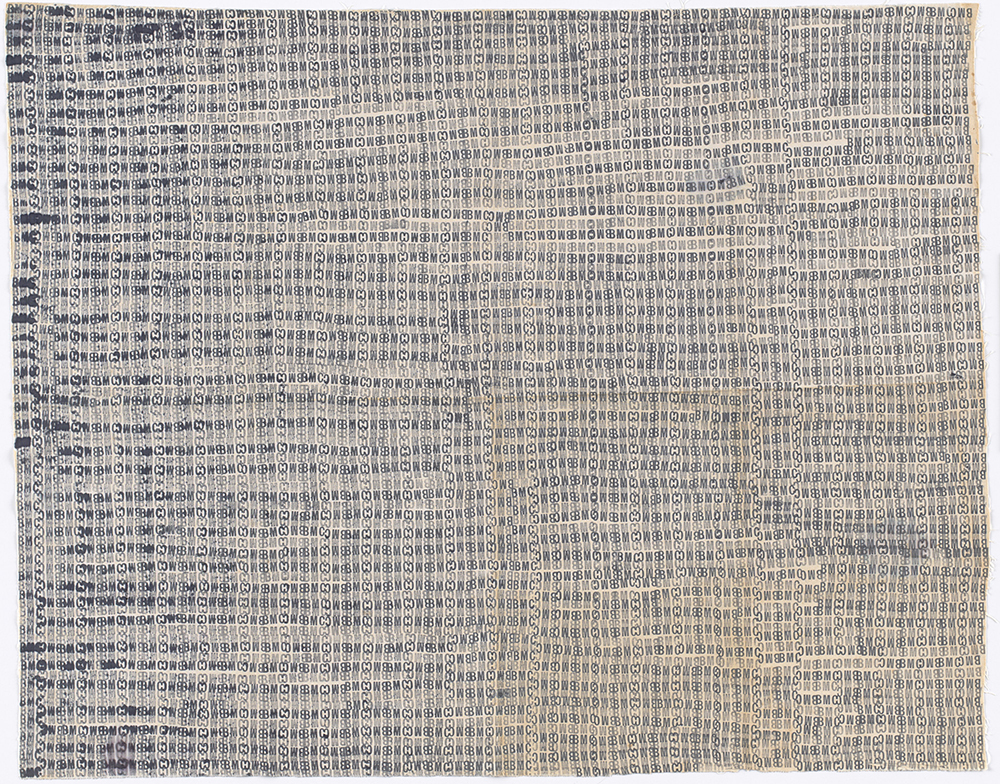
Ultimately, she found what turned out to be the ideal educational opportunity. Black Mountain College in North Carolina was a progressive liberal arts college with different ideas about education and artistic training. There she studied with an eclectic mix of teachers including painter Josef Albers, inventor Buckminster Fuller, mathematician Max Dehn, and many notable others. As part of their experience, students were expected to do farm chores or work elsewhere on campus. For Asawa, this idea of work became central to her artistry, “through [the teachers there] I came to understand the total commitment required if one must be an artist.” While working in the laundry, for example, she found a stamp with the BMC initials of the college and used it to hand stamp fabric.
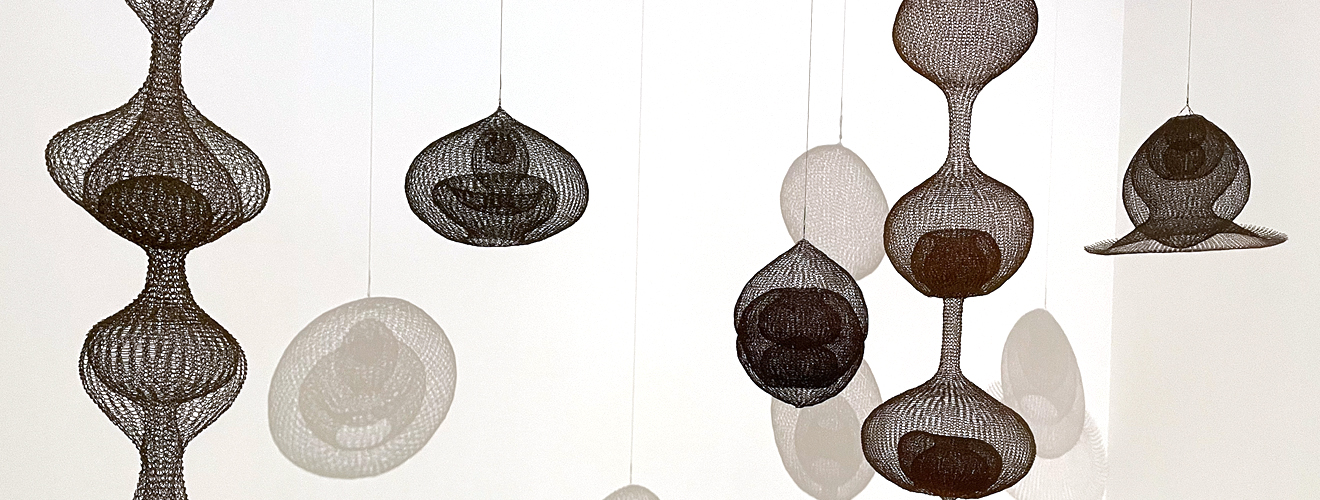
After California repealed laws prohibiting interracial marriage, Asawa moved to San Francisco with her husband who was an architect and fellow Black Mountain alum. She perfected her signature looped wire sculpture technique that looks almost like medieval mail. She described it as, a “continuous form within a form” and “a shape that was inside and outside at the same time.”[1] You can clearly see this notion at work from the samples below. The shadows cast by these pieces are as captivating as the sculptures themselves.
[1] Plaque at the Ruth Asawa exhibit at MOMA 2026.
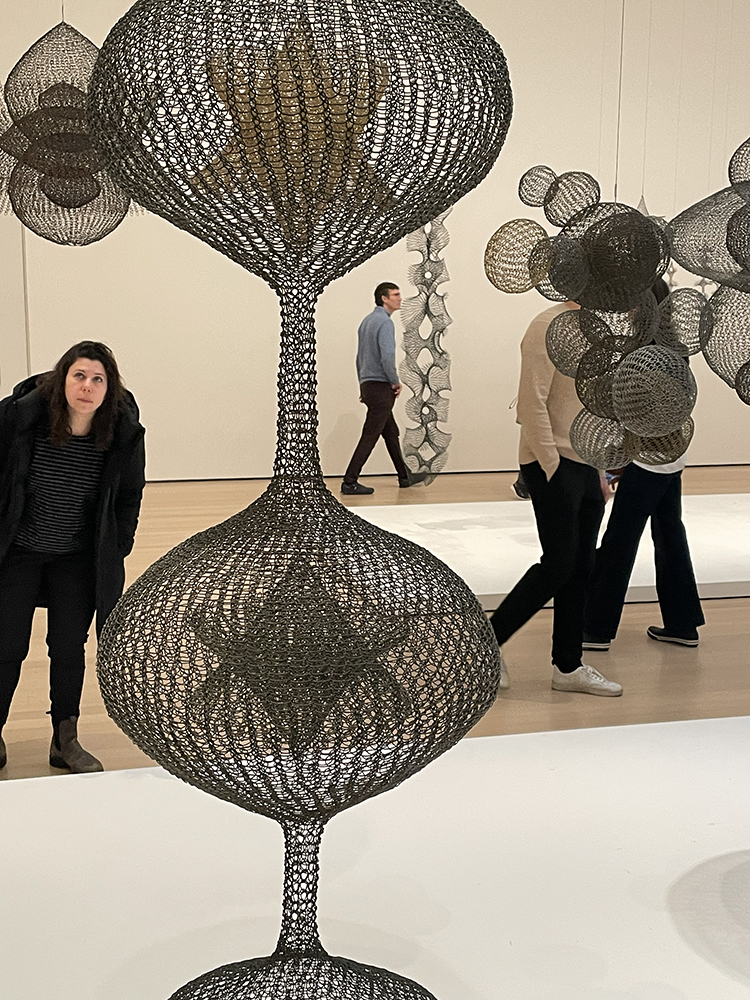
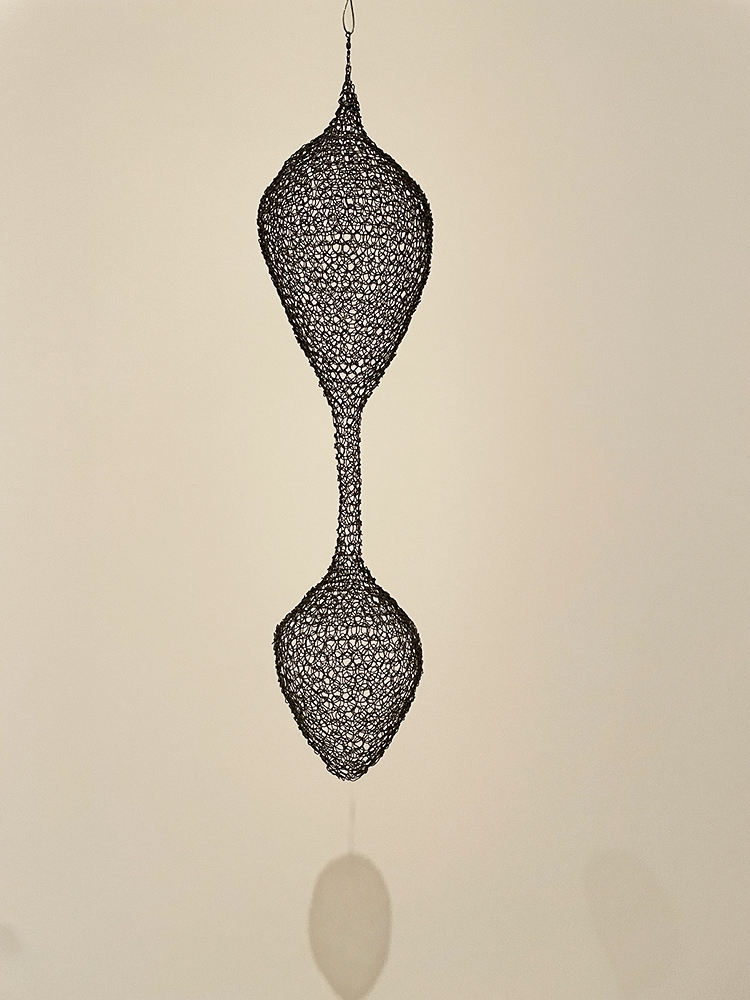
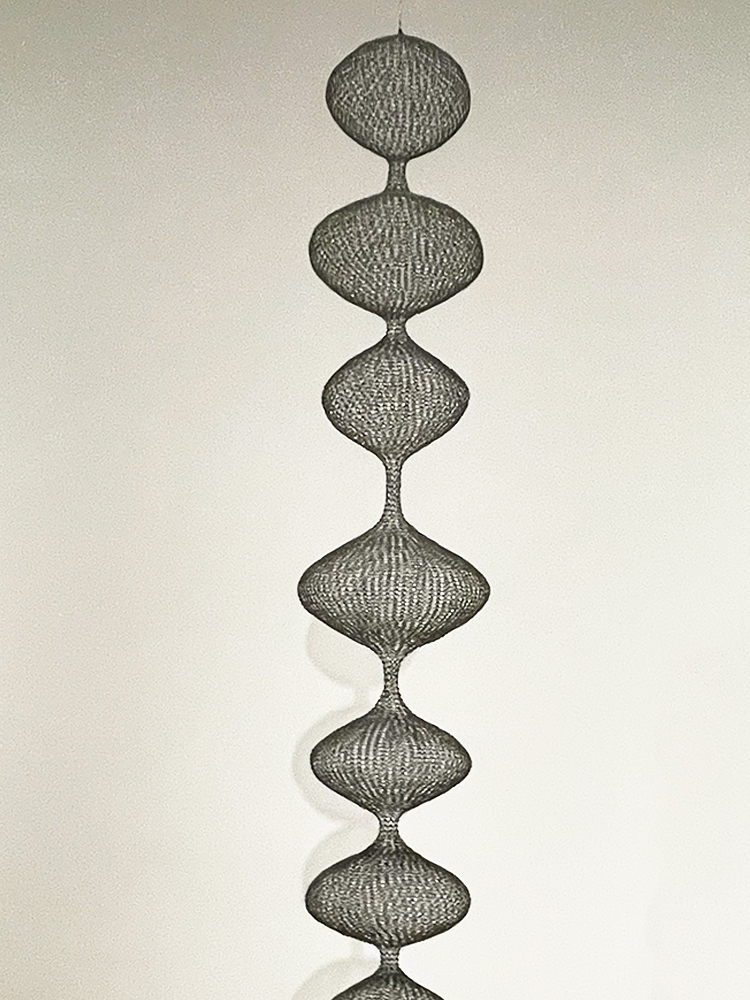
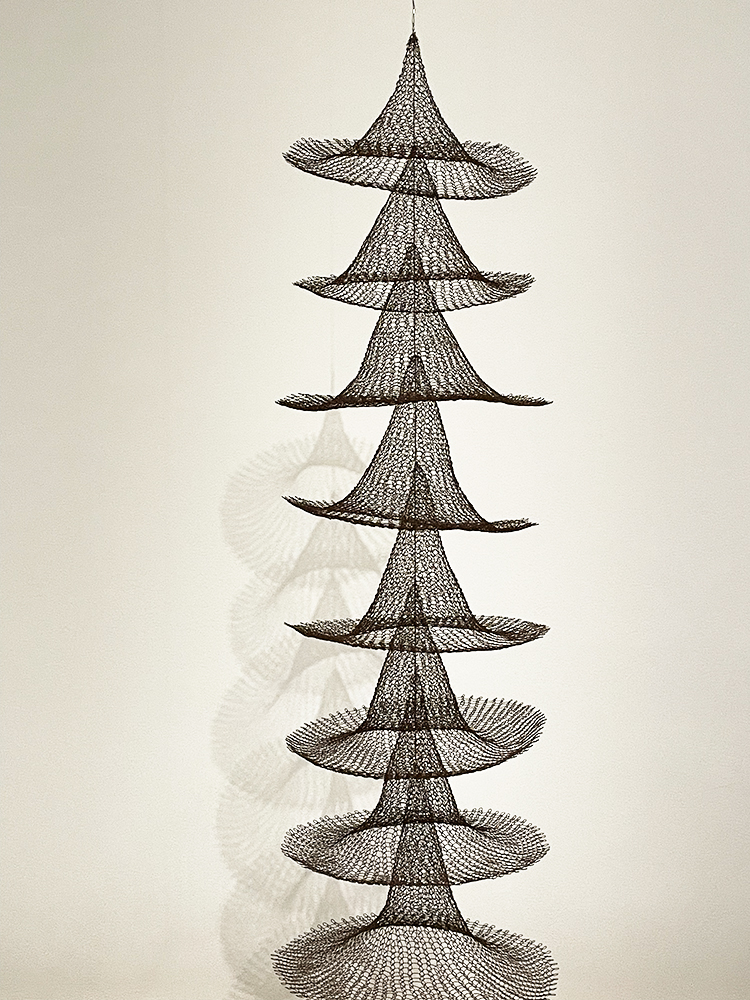
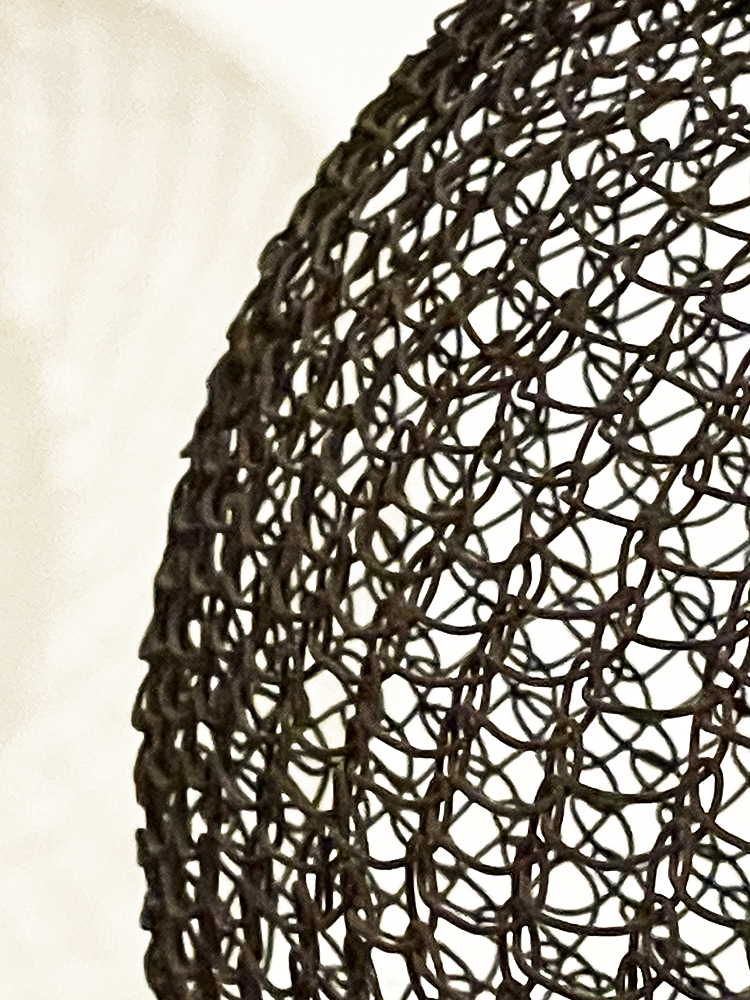
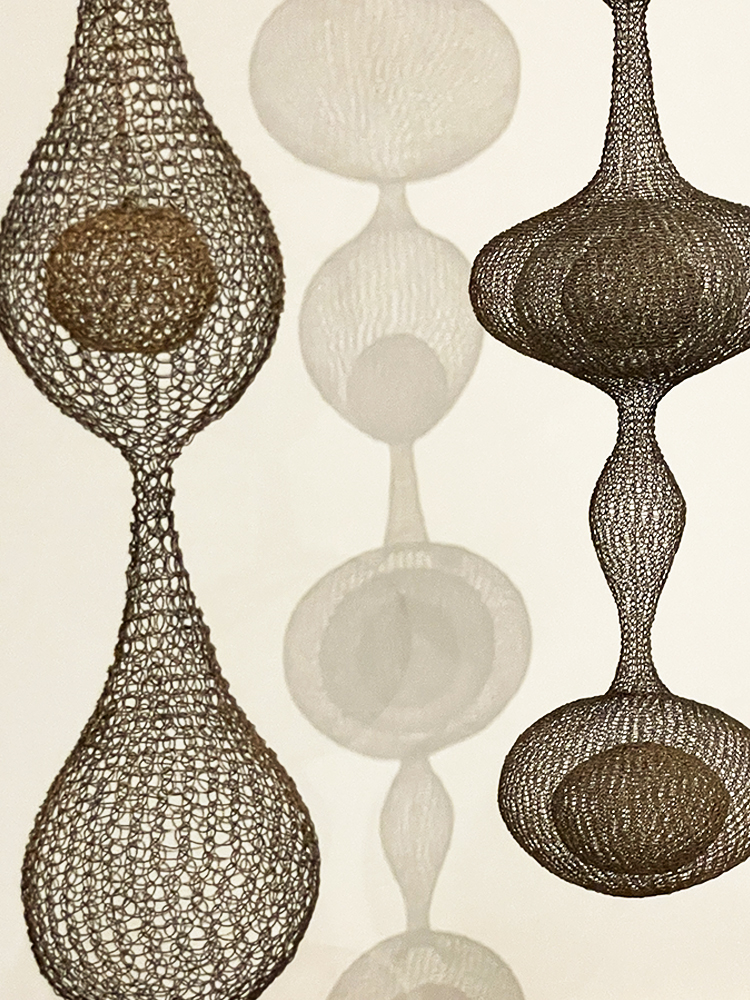
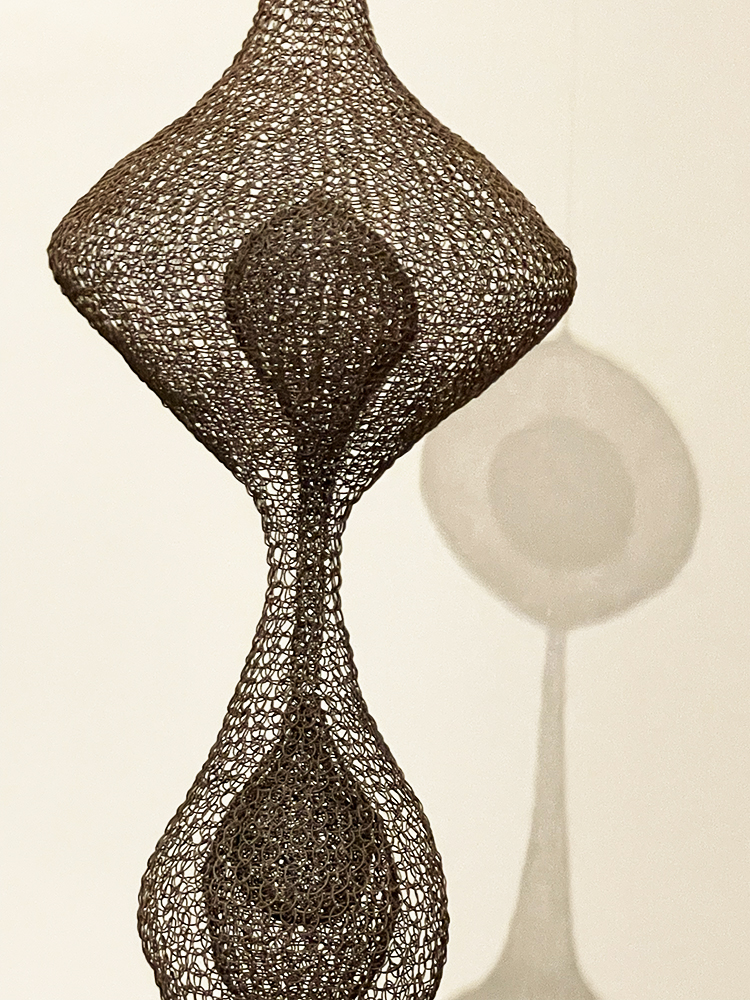
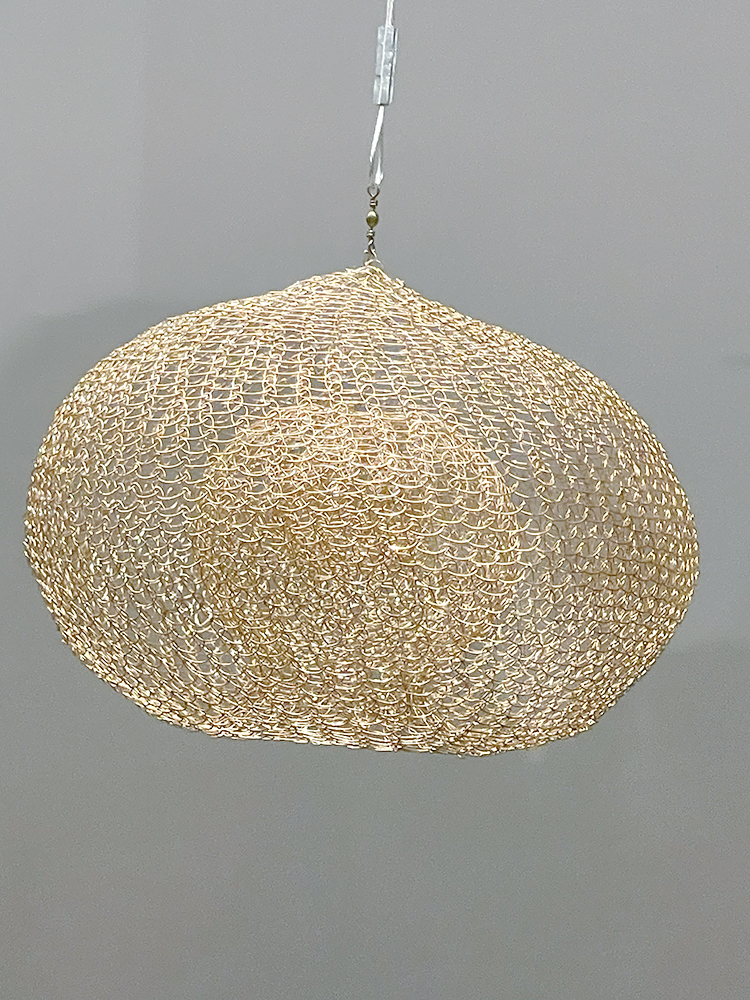
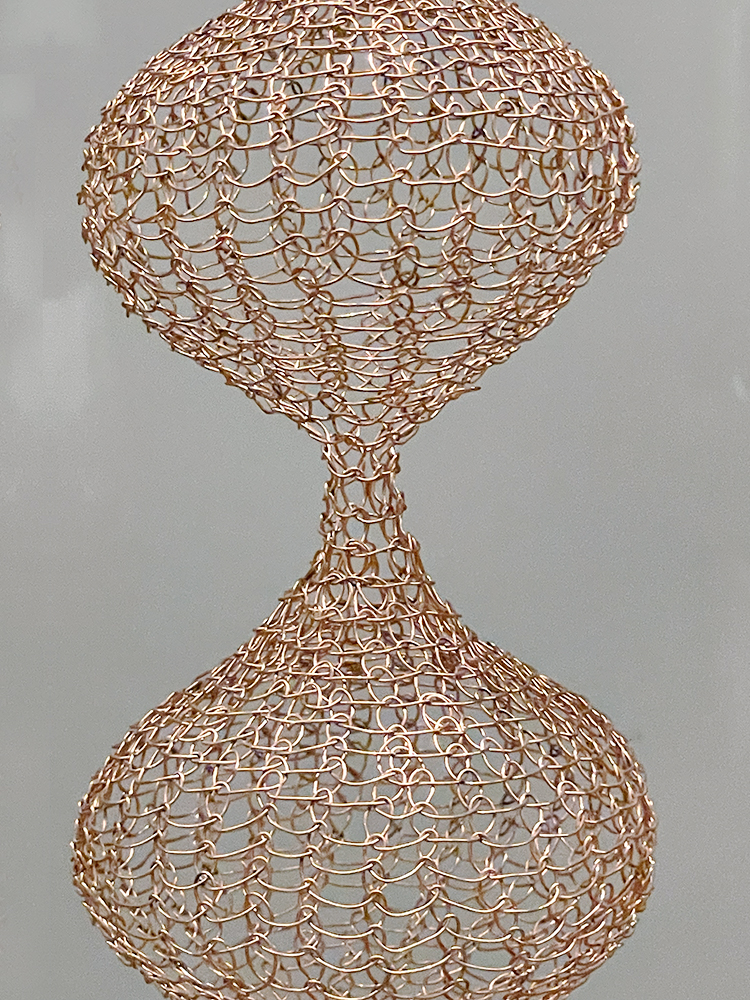
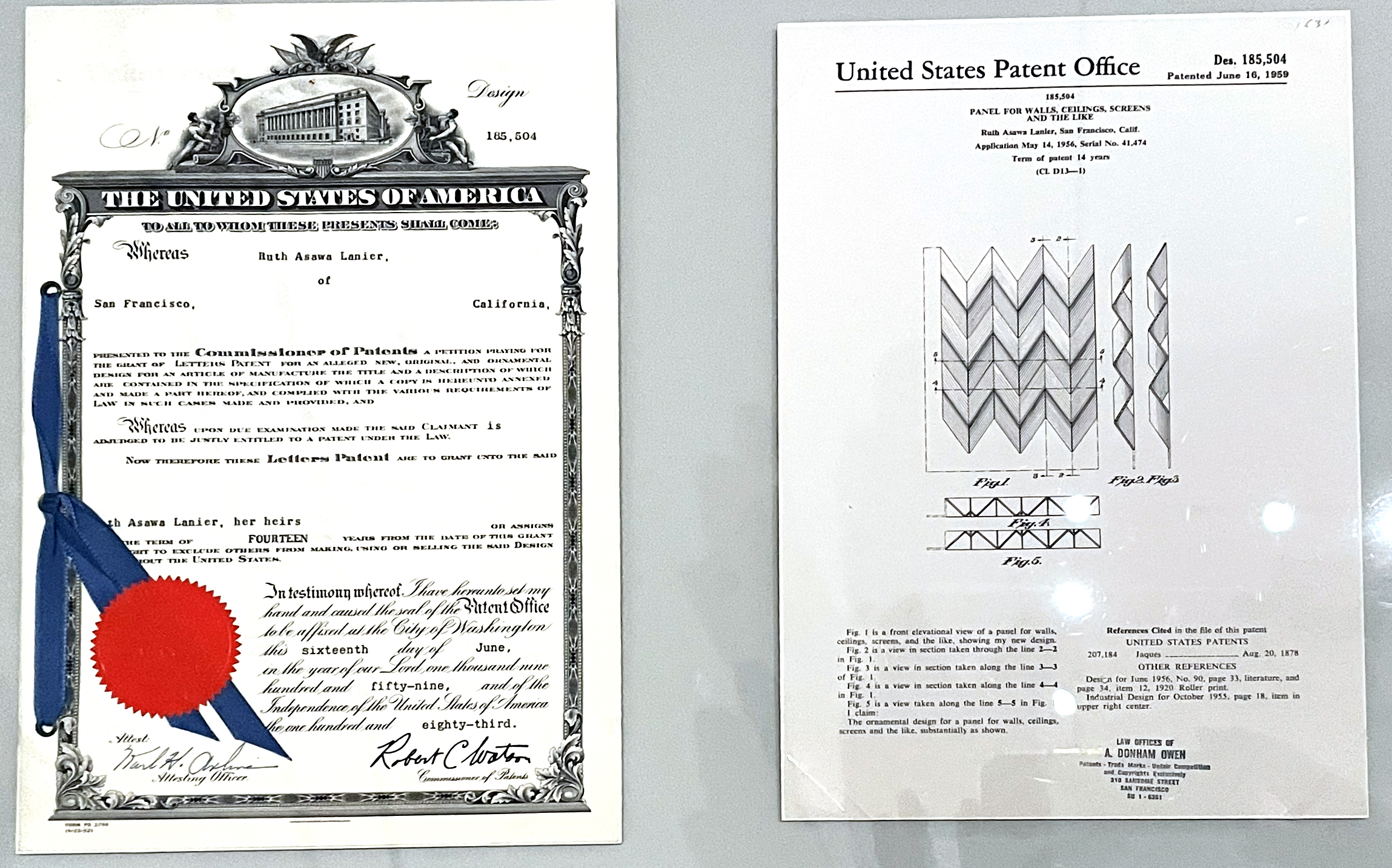
Interestingly, she applied for and received a patent from the US Trade and Patent Office for her metallic weaving technique. Notice the detailed math notation!
Once she was an established artist, it was important for Asawa to continue in the spirit of the Black Mountain College tradition of making a local contribution to the arts community. She co-founded the Alvarado School Arts Workshop, an innovative program that involved parents and professional artists in the public schools to ensure that young children could develop more fully as individuals. Initially, there was no money for art supplies so she made baker’s clay, an affordable, accessible material the kids happily used to make flat sculptures.
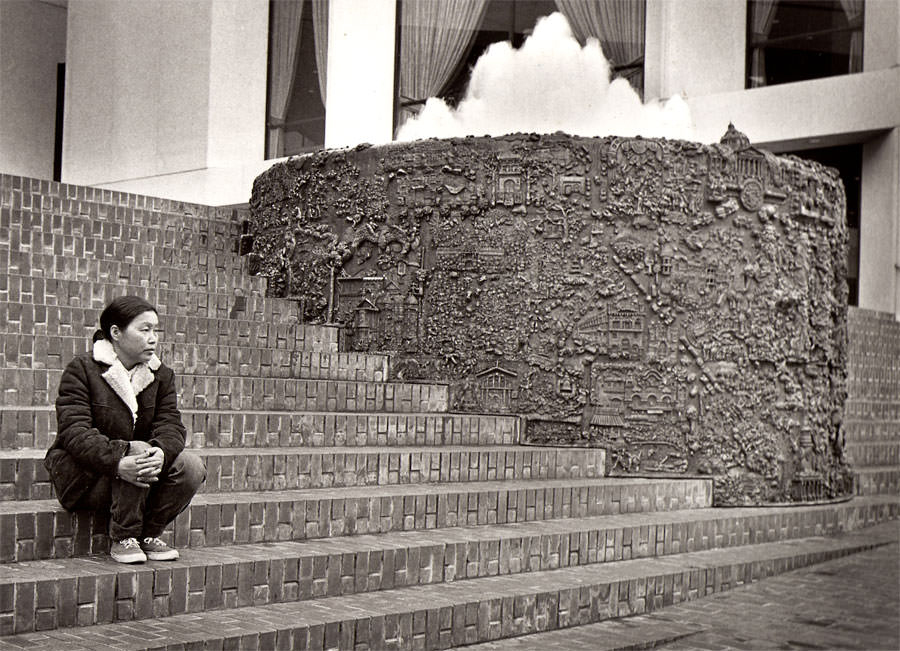
Asawa was commissioned for many public works during her career. She created a stunning bronze bas-relief sculpture for the entry of the Grant Hyatt hotel in San Francisco. The piece is set into the center of a brick staircase and showcases whimsical scenes of the city designed with local school children using baker’s clay. Her dedication to arts education extended to board service with the California Arts Council, the National Endowment for the Arts, and as a trustee of the Fine Arts Museums of San Francisco.
For Asawa, there was no distinction between making art and performing ordinary life tasks. Whether she was weaving a new looped metal shape or squeezing lemons to make lemonade for her six children. A stunning and startling way to think.