More Than Meets the Eye: A Visit to the Norman Rockwell Museum
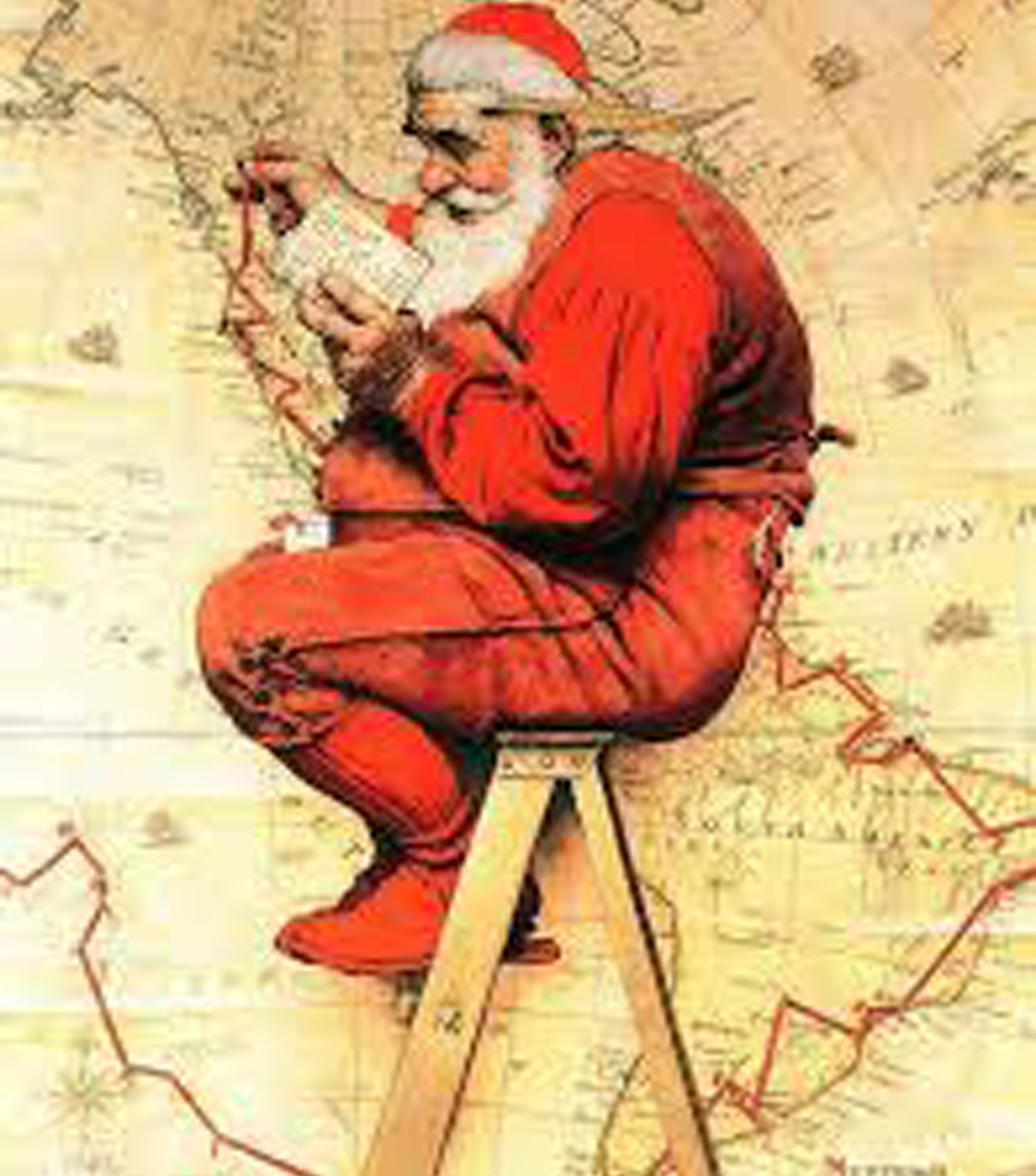
Looking for a little bit of light at the tail end of a long winter, my husband and I took a car ride to Stockbridge, MA. After a delightful lunch at the quirky Red Lion Inn, we went to visit the home of its iconic resident, Norman Rockwell. I foolishly thought I was familiar with his work. My impression was of idealized moments of American life — a boy scout heading into the woods, barefoot kids returning from a fishing hole, Santa cross-referencing his list against a globe. Warm, universally relatable scenes that didn’t ask anything difficult of the viewer. Wow, was I wrong.
Rockwell was a powerful storyteller. His extraordinary draftsmanship allowed him to recreate scenes so realistic, the viewer felt part of the narrative. His process was time-consuming and detailed. The first step, and often most challenging one, was to come up with a story line. He thought deeply about the message and how to convey it. His models were people he encountered in his daily life who he coached on how to emote the sentiment he wanted to capture. Once cameras were readily available, he took photos, sometimes hundreds of one scene. Then, he drew detailed pencil studies and a final pencil sketch at full size. After he worked out all of the details, he created the final oil painting.
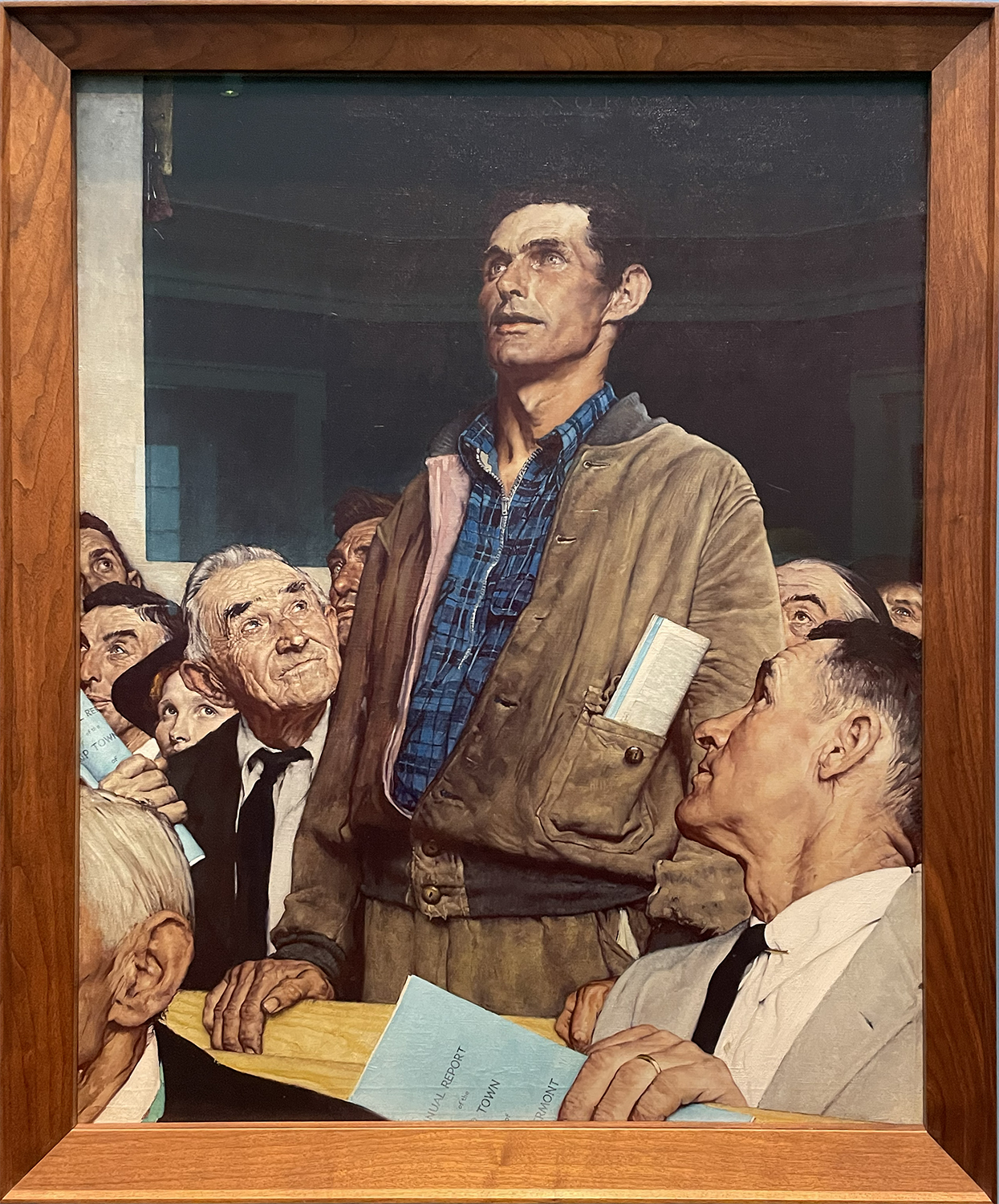
Rockwell’s 1942 cover illustration for the Saturday Evening Post “Freedom of Speech,” depicts a man fervently speaking at a Town Meeting. He’d been commissioned to create illustrations to depict Roosevelt’s Four Freedoms. Rockwell recalled how Jim Edgerton had stood and argued against the popular opinion at this Town Meeting. No one interrupted him or, in Rockwell’s own words, “shouted him down.” When he finished his say, he nodded and took his seat. Rockwell realized that this was what free speech was all about and painted himself as he often did in the forefront looking up at the speaker. This resonated so strongly with me in this time of division and lack of respect for people with views that differ from your own.
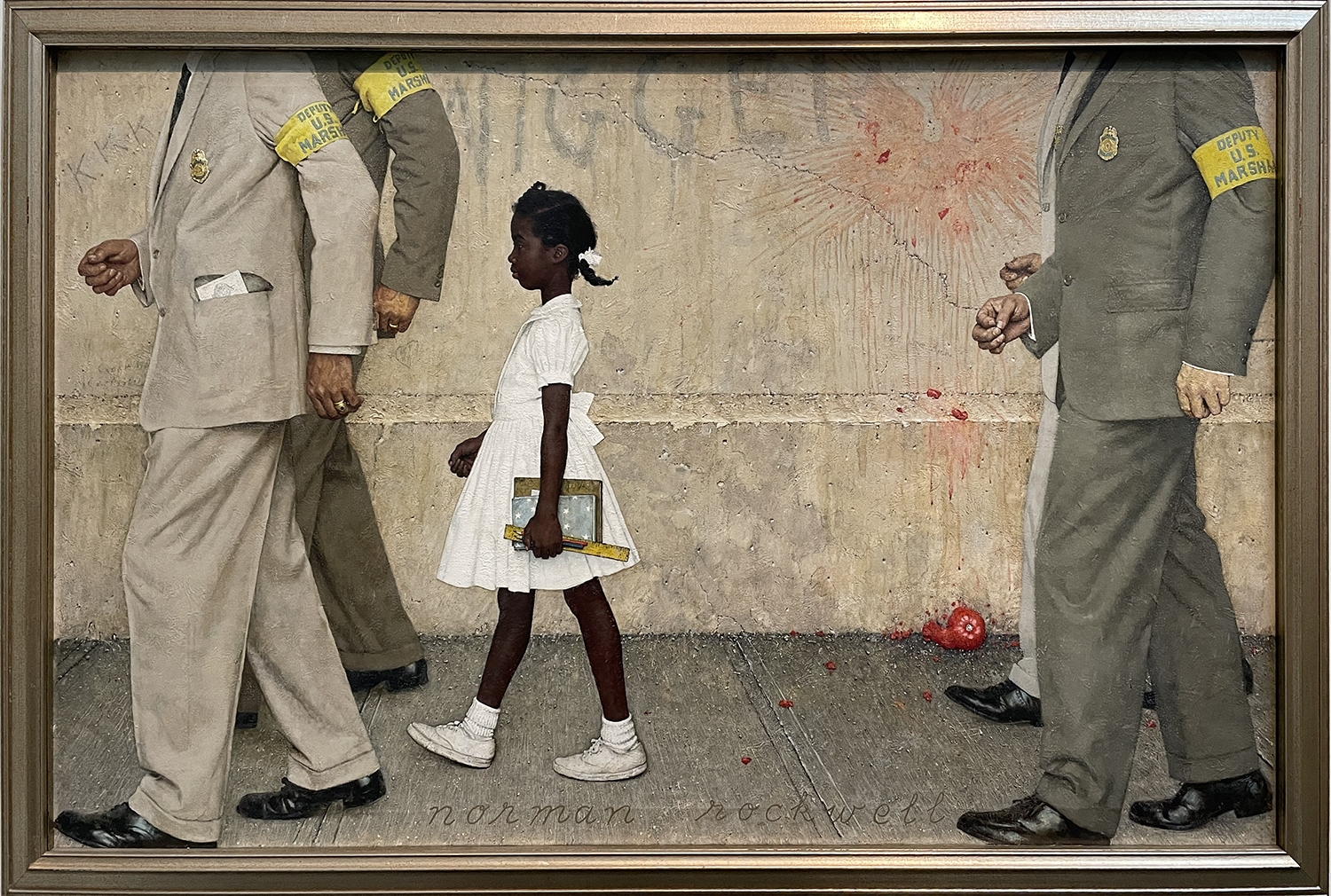
With “The Problem We All Live With” for Look magazine in 1963, Rockwell began to embrace the idea of social justice themes. On the surface, this well-known image portrays a young black girl on her way to school. She is the bright and almost bouncy figure in a crisp white dress whose face is the only one you see. Then you notice that she’s being accompanied by four U.S. marshals. If you look further, you see the splatter of a thrown tomato against the wall she’s walking past. The racial slurs written on the wall are the final piece to unraveling the painting’s message of America’s history of racial injustice and the turbulent era of desegregation.
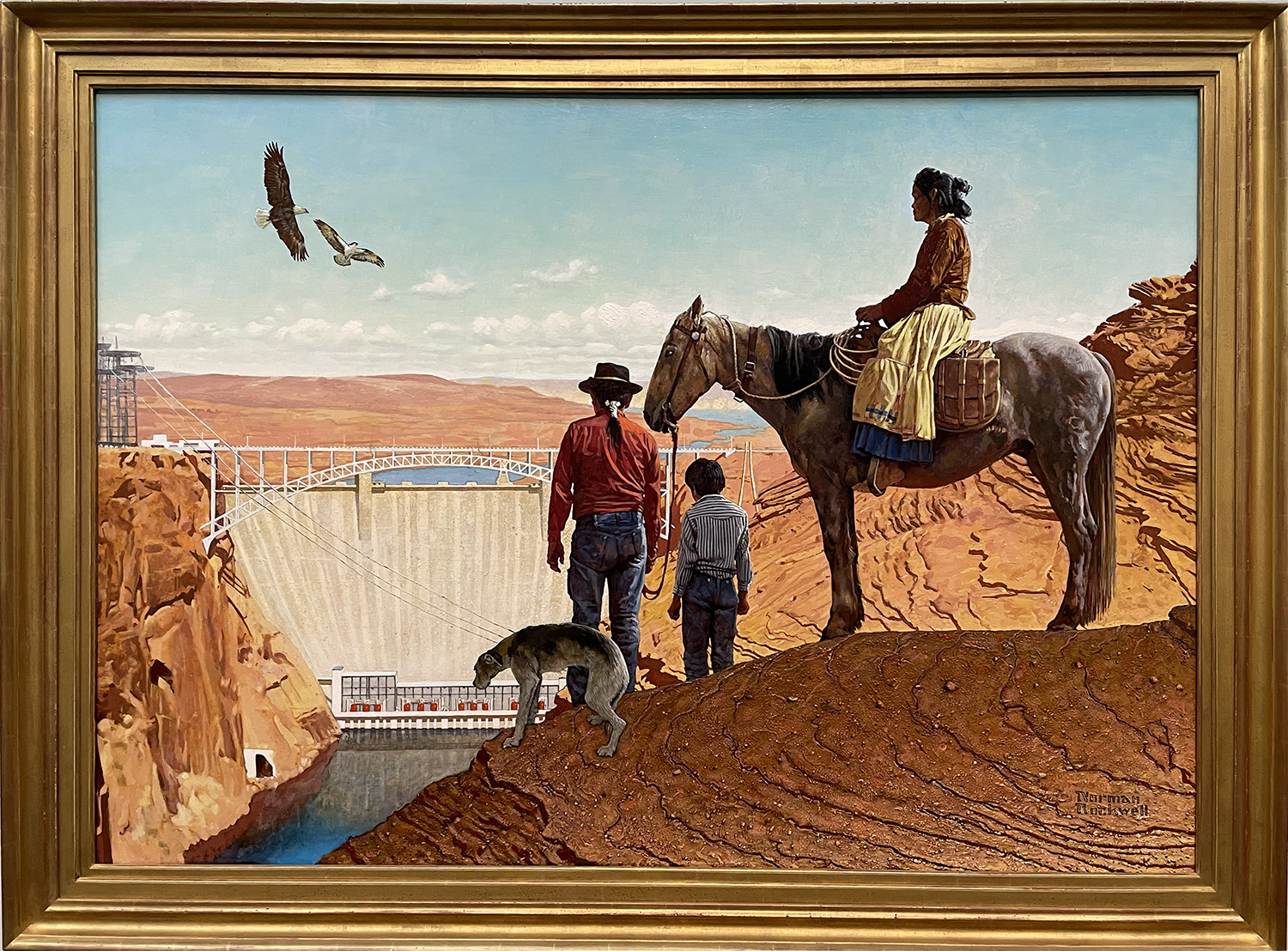
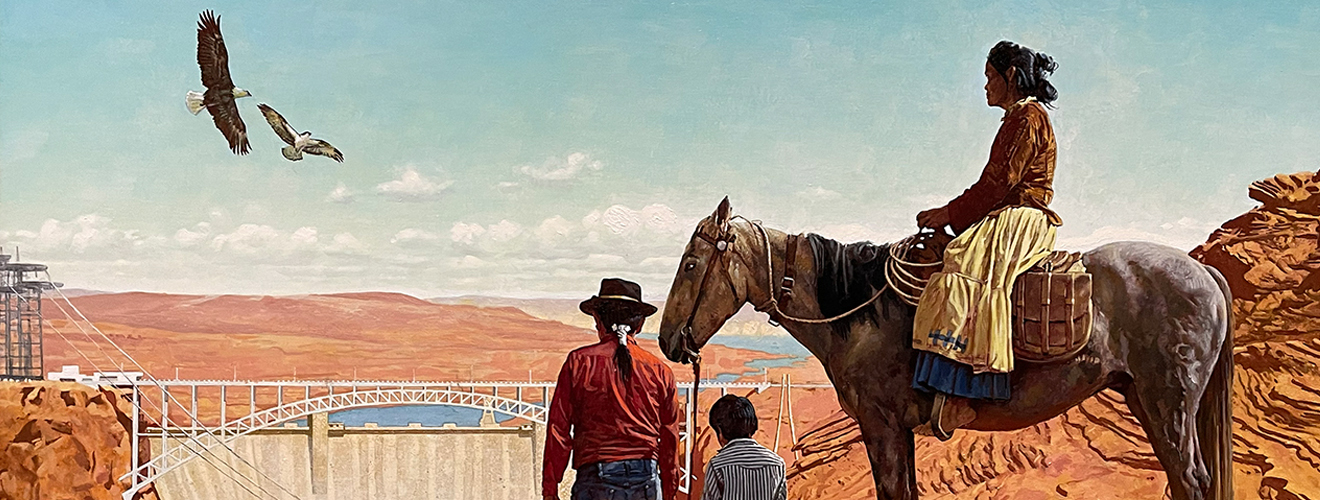
Rockwell’s true mastery was in the deep meaning behind each scene. One could easily be fooled into thinking a painting was about one thing when it was really about something entirely different. The beautifully depicted Navajo family gazing at the newly constructed Glen Canyon Dam distracts the viewer from the real message – the harsh reality that the dam dramatically changed the Navajo’s sacred land and way of life. True to his desire to work with real models, Rockwell worked with a family from nearby Black Mesa. Interestingly, he was commissioned by the United States Department of the Interior and the painting originally hung in the Glen Canyon Visitor Center. Many simply saw a classic American landscape complete with a soaring bald eagle. The depth of the family’s plight was something you had to look more closely to comprehend.
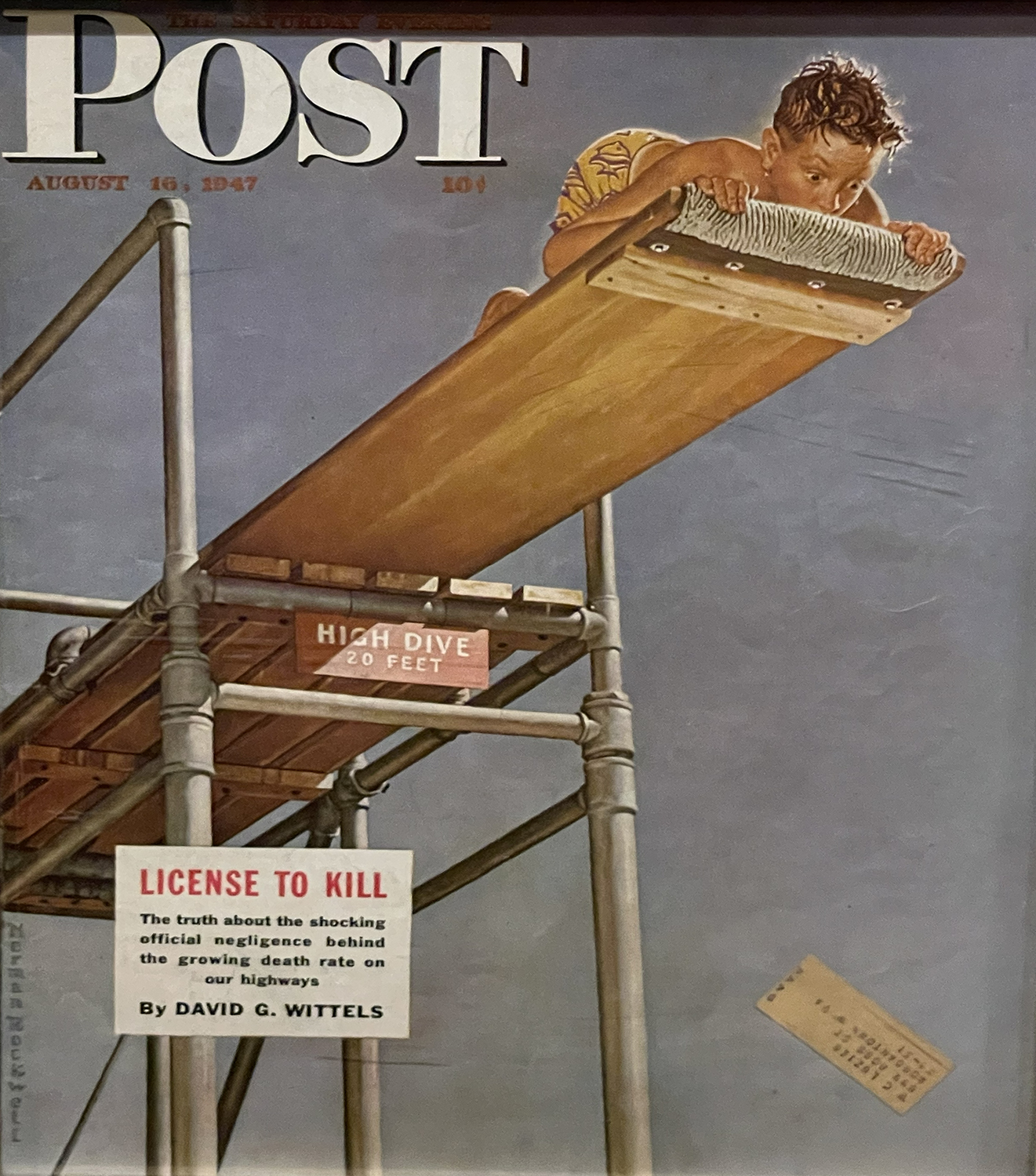
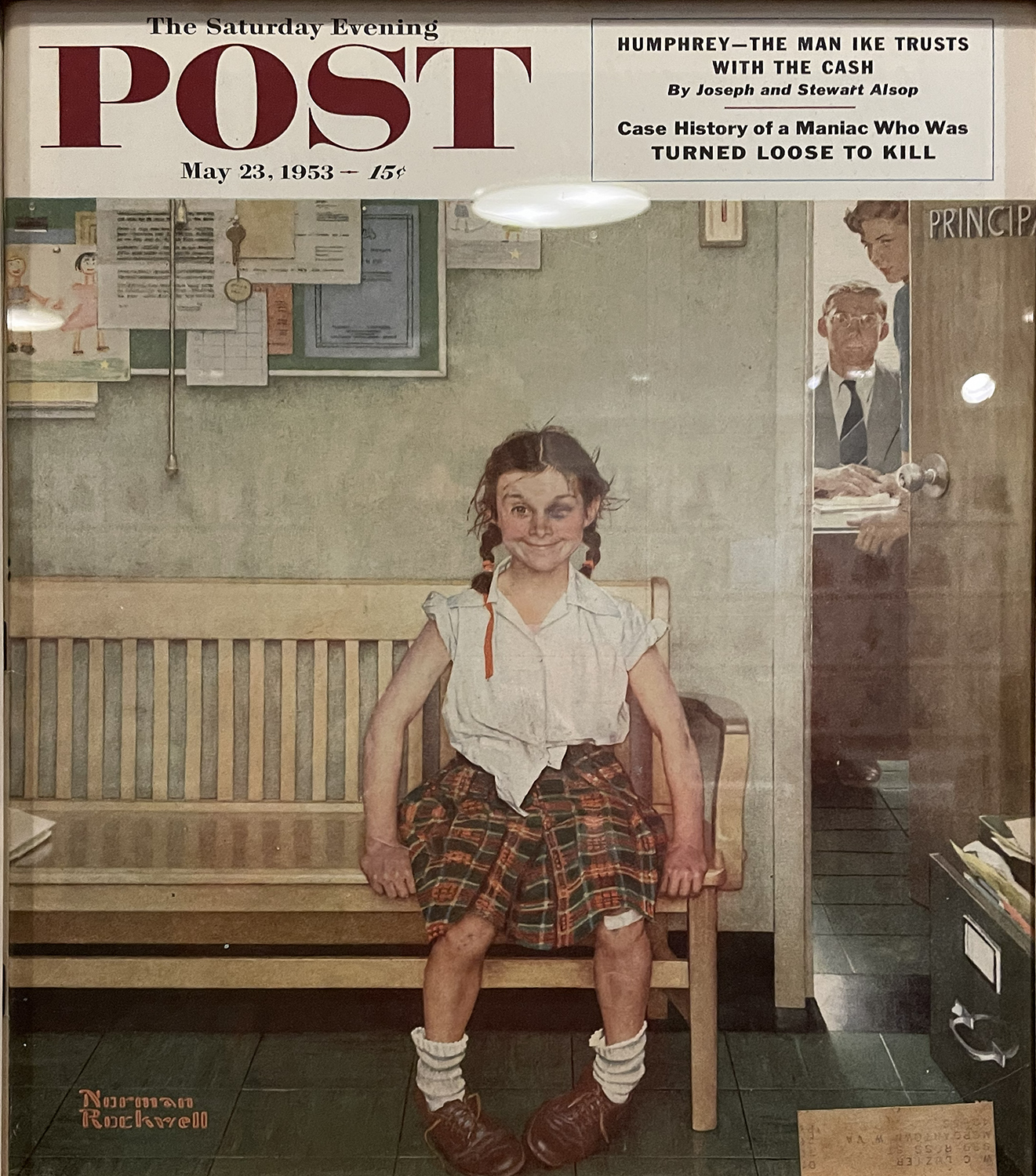
And, yes, he did capture moments that many of us could identify with. The exhibit room with every cover he created for The Saturday Evening Post from the 1920s to the 1960s included many of them. The boy who crawled to the end of the high dive on his belly and looked fearfully down. The police officer talking to a young boy at the soda fountain counter. The boys fleeing with their clothes past a No Swimming sign, their dog leading the way. The girl with the black eye sitting on the bench outside the principal’s office. And so many more.
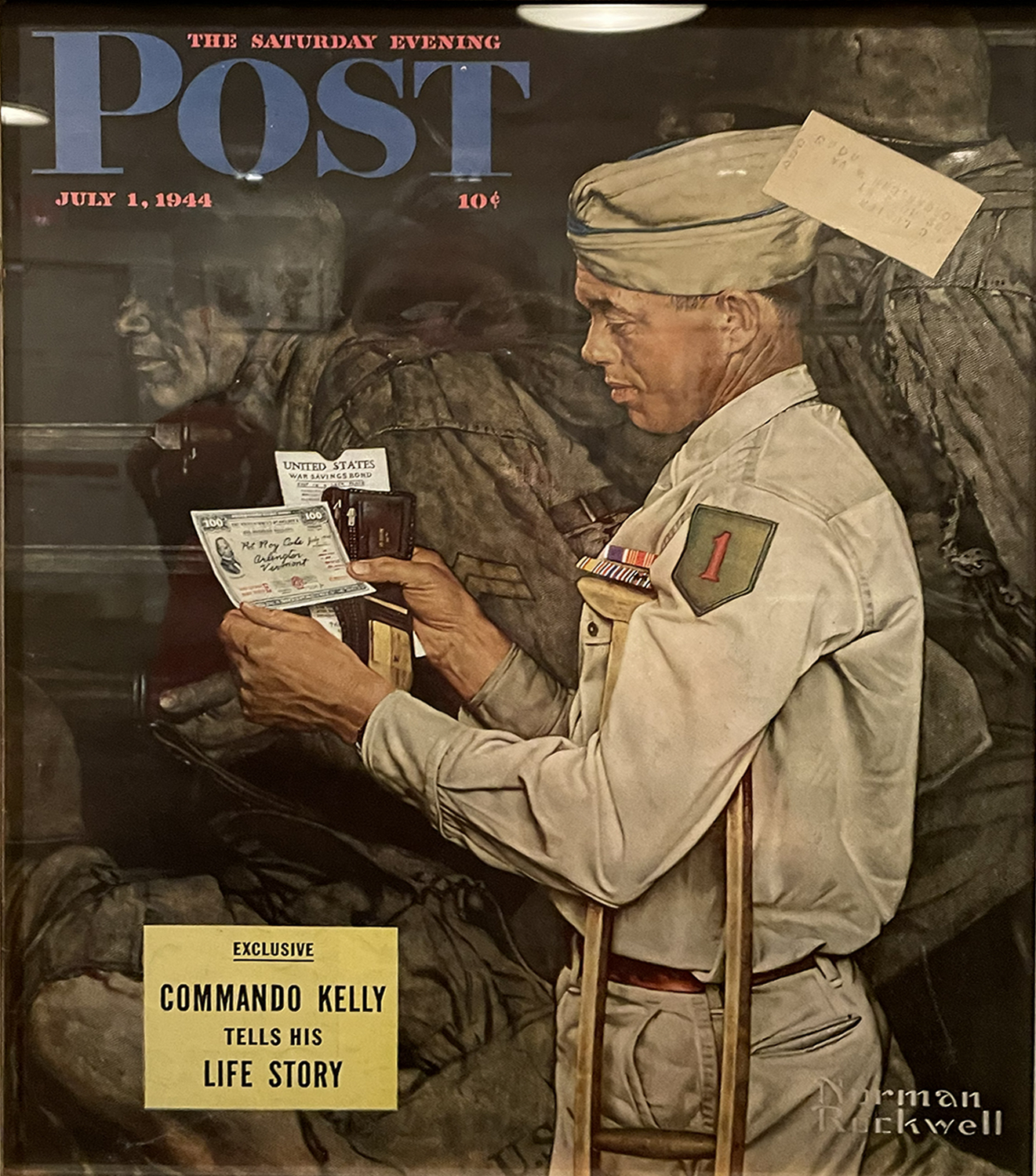
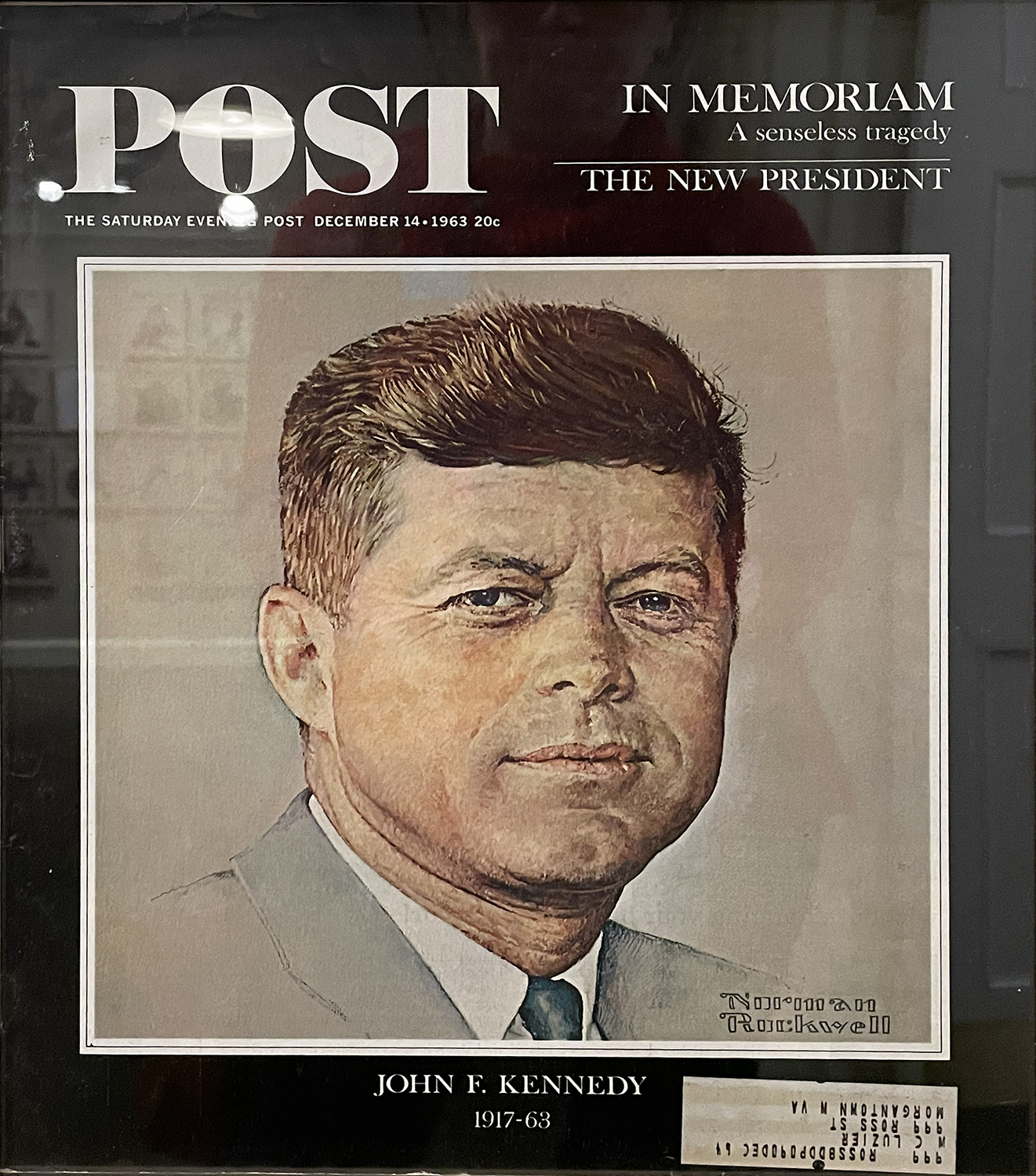
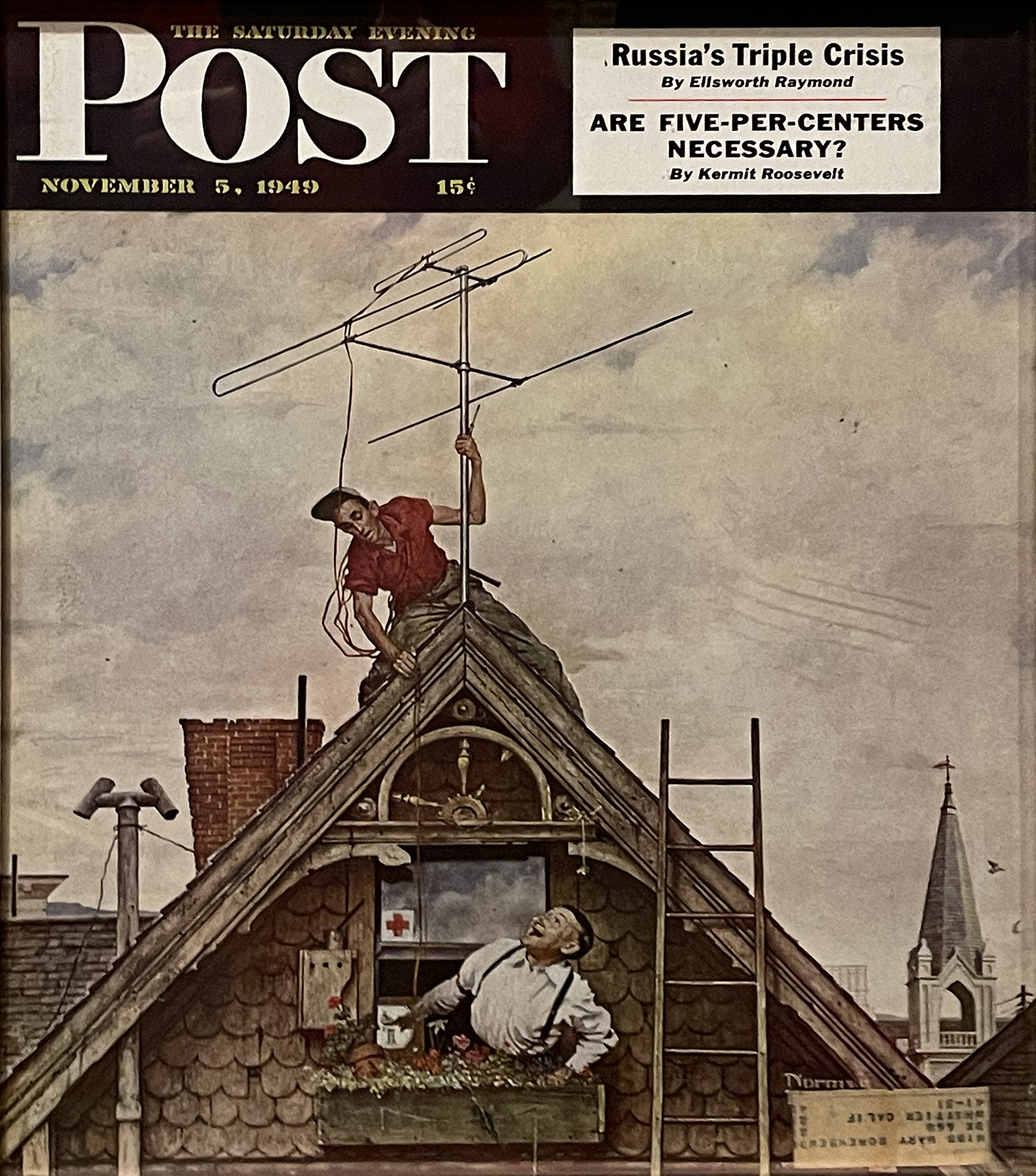
But, when you look more closely, there’s always another layer. Other covers featured an injured soldier holding a U.S. Savings Bond, a man installing a television antenna forever changing our lives, a portrait in memoriam of John F. Kennedy. This visit was a reminder to set preconceptions aside, look more closely, and really listen to what an artist is saying. As a designer, that’s a lesson worth carrying into the studio.