Mind, Place, Purpose, Spirit:
A Tribute to American Indian Artists
I’ve always been personally drawn to the artwork of American Indians, both ancient and contemporary. [I’ve used “American Indian” throughout this piece, following the language of the artists and institutions featured here, while recognizing that “Indigenous” and “Native American” are also widely used and preferred by many.] As we mark the 250th anniversary of the signing of the Declaration of Independence, I’m reminded that these peoples inhabited this land for thousands of years before European settlers arrived and I’d like to recognize their artistic contributions to our history. To me, the overarching theme of their artwork seems to encompass mind, place, purpose and spirit. The work is intellectually grounded, deeply tied to land and environment, made with clear intention, and animated by something that transcends the purely visual. These qualities show up across centuries and across very different tribal traditions. Works include a wide range of materials and styles.
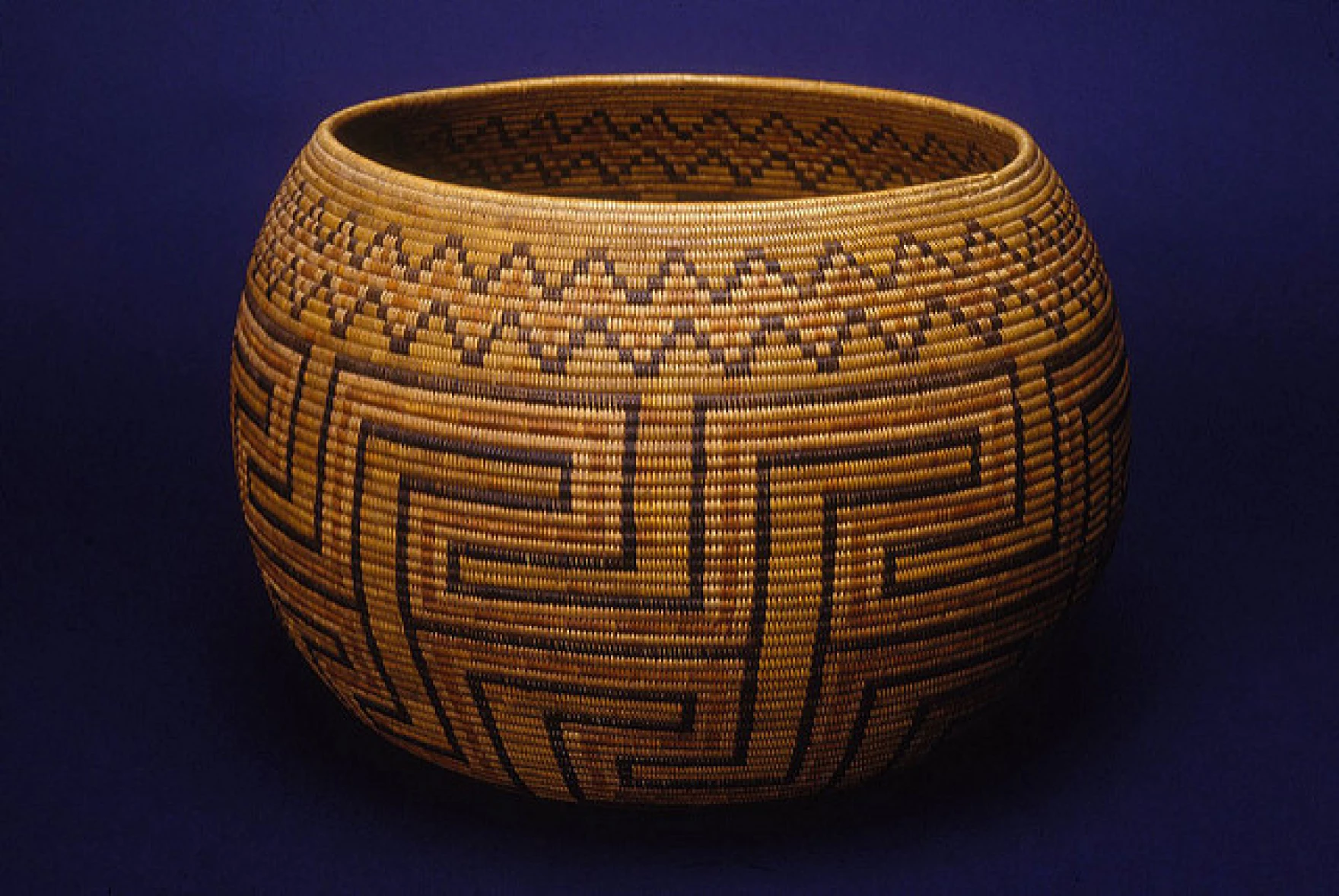
The Anasazis of the Southwest Four Corners area created early woven objects made from twine and plant fibers. Some weaving samples date from as long ago as 9,400 years. Artisans made baskets, pottery, clothing, sandals and other frequently used items with geometric patterns.
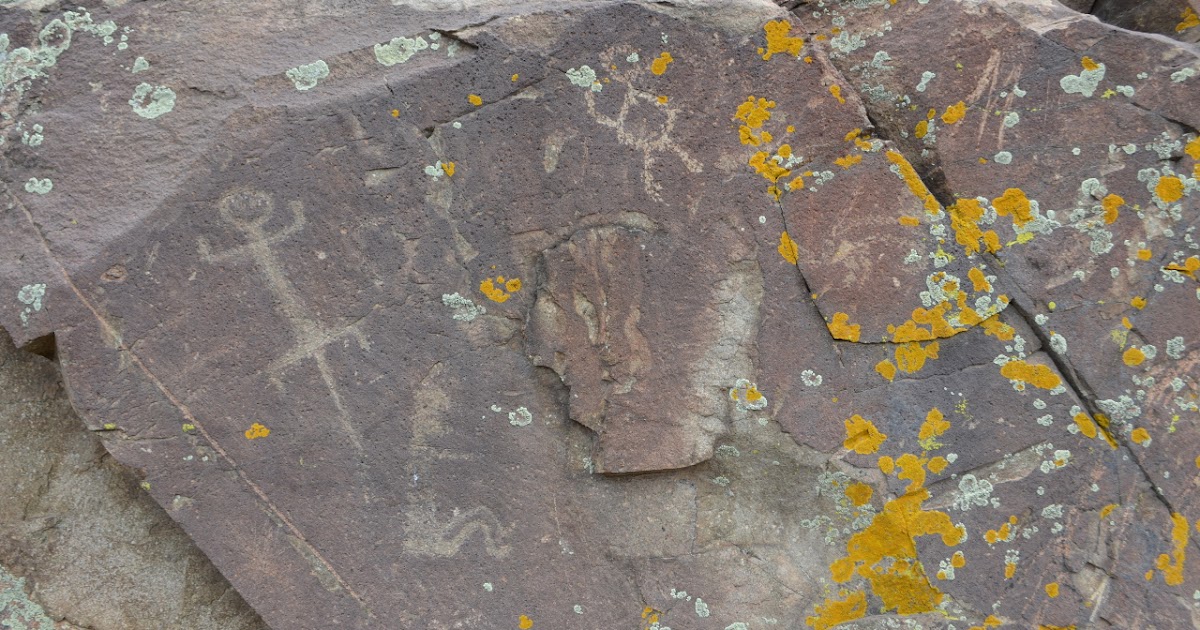
Petroglyphs in the Gila National Forest were primarily created by the Mimbres and Mogollon cultures around 1,000 years ago. Basic figure drawings of animals and humans were created by scratching dark areas of volcanic rock to reveal the lighter rock beneath.
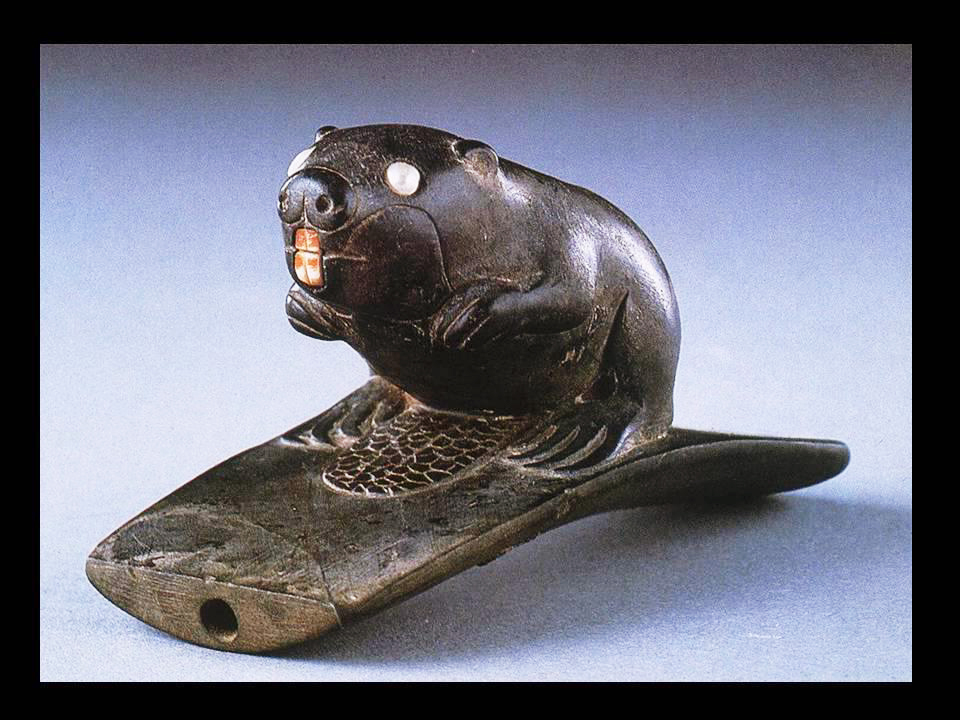
This pipestone beaver effigy pipe dating from 100 BCE – 200 BCE was created by the Havana Hopewell culture from Bedford Mound, Pike County, IL. The intricately carved beaver is posed in a fighting stance with tail tucked between his legs and inlaid pearl eyes. Archaeologists believe these pipes were used by ceremonial leaders who smoked potent native tobacco in ritual contexts, invoking the spirit of the effigy animal as a guide or protector.
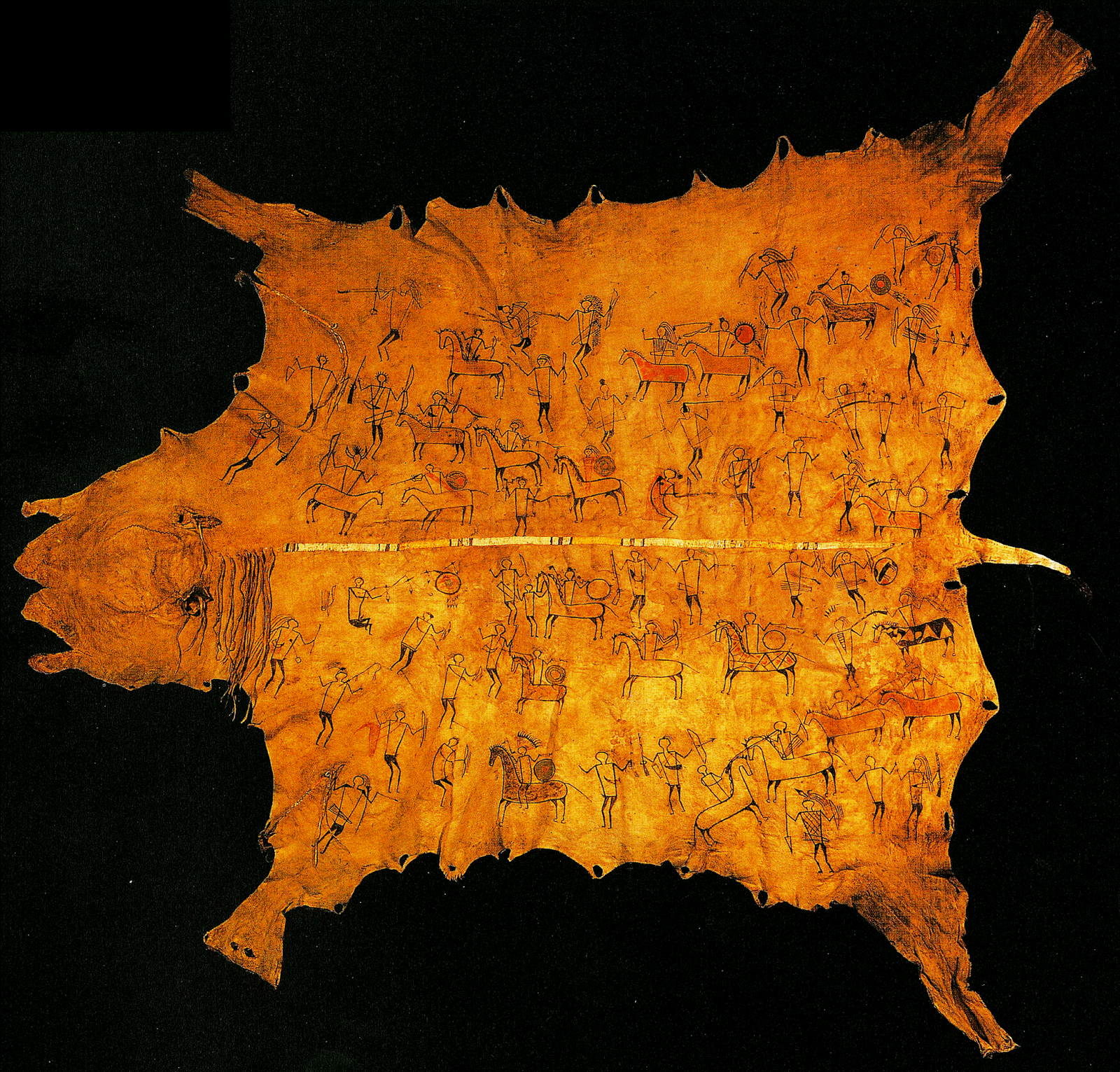
This pictographic bison robe was likely created by a Sioux artist in what is now North Dakota in the 1800’s to depict a tribal battle.
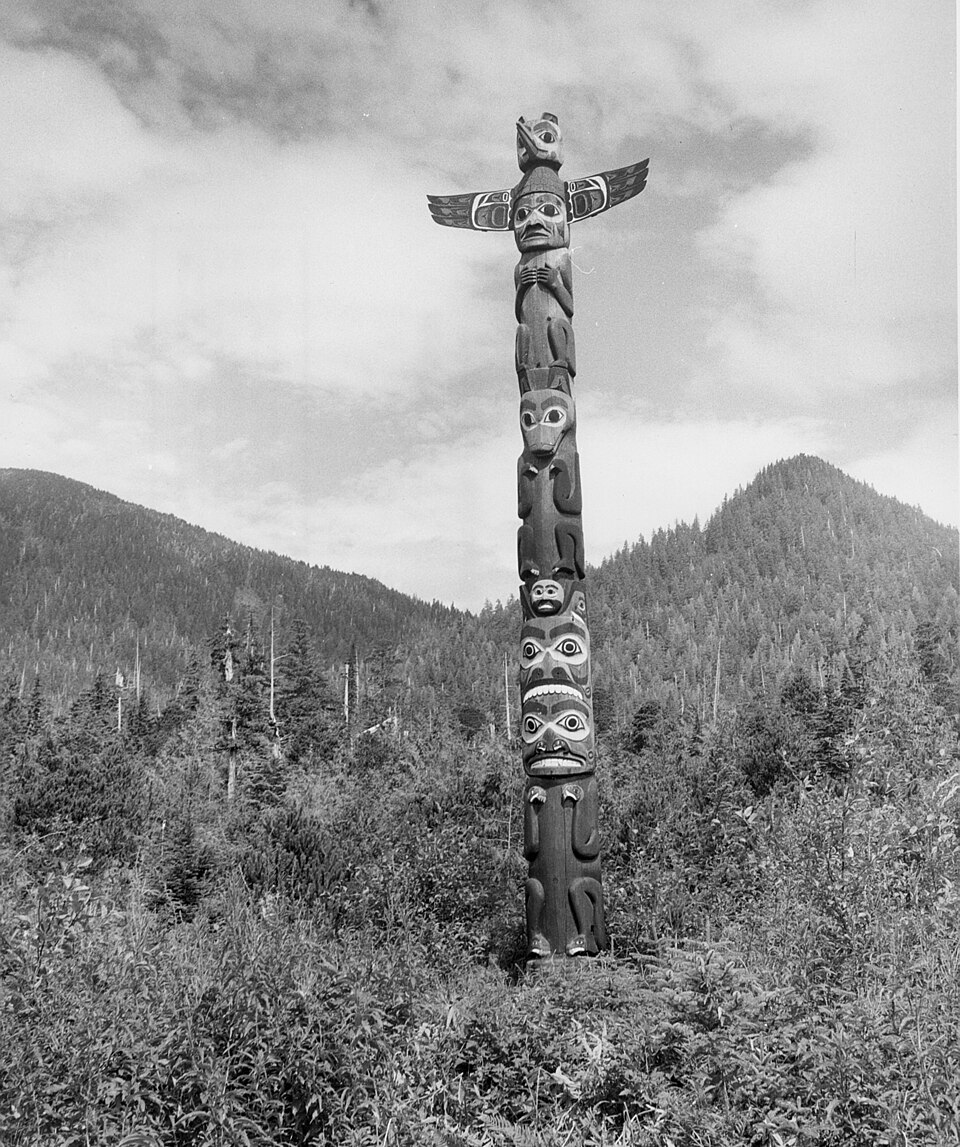
Art of the Coastal Northwest dates back at least 4,500 years. Families displayed their distinct crests on their homes, canoes and sometimes on totem poles. Totem poles were a way of preserving family lore as they recounted stories of an ancestor’s courage or accomplishment. This Thlinget totem pole from Saxman Park in Alaska features the figure of a raven on top.
Contemporary American Indian Artists
Contemporary Indigenous artists carry those traditions forward, but on their own terms. The artists featured here work across sculpture, painting, beadwork, and installation, and their subjects range from ancestral storytelling to pointed political critique. What connects them to their predecessors is not style but intention: art as record, art as resistance, art as identity.
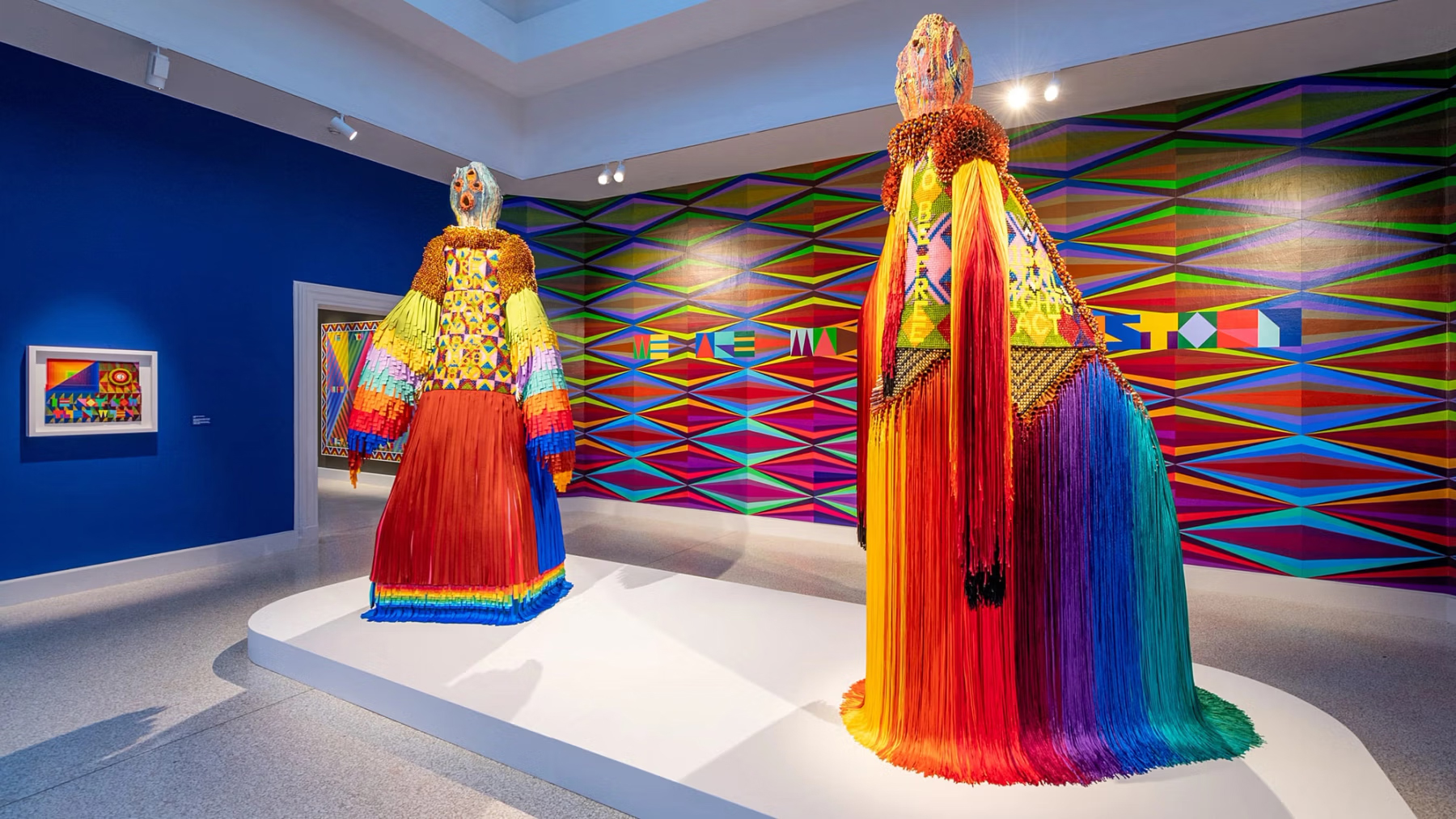
Jeffrey Gibson is an American Mississippi Choctaw/Cherokee multidisciplinary artist (instagram.com/jeffrune). Currently, an artist in residence at Bard College, Gibson lives in the Hudson Valley area of New York. He was the sole artist to represent the United States at the 2024 Venice Biennale. He used an electric color palette and variety of media including these two oversized figures titled “The Enforcer” and “WE WANT TO BE FREE” that incorporate text from Reconstruction-era constitutional amendments along with the Indian Citizenship Act of 1924, the law that granted basic rights to Indigenous people.
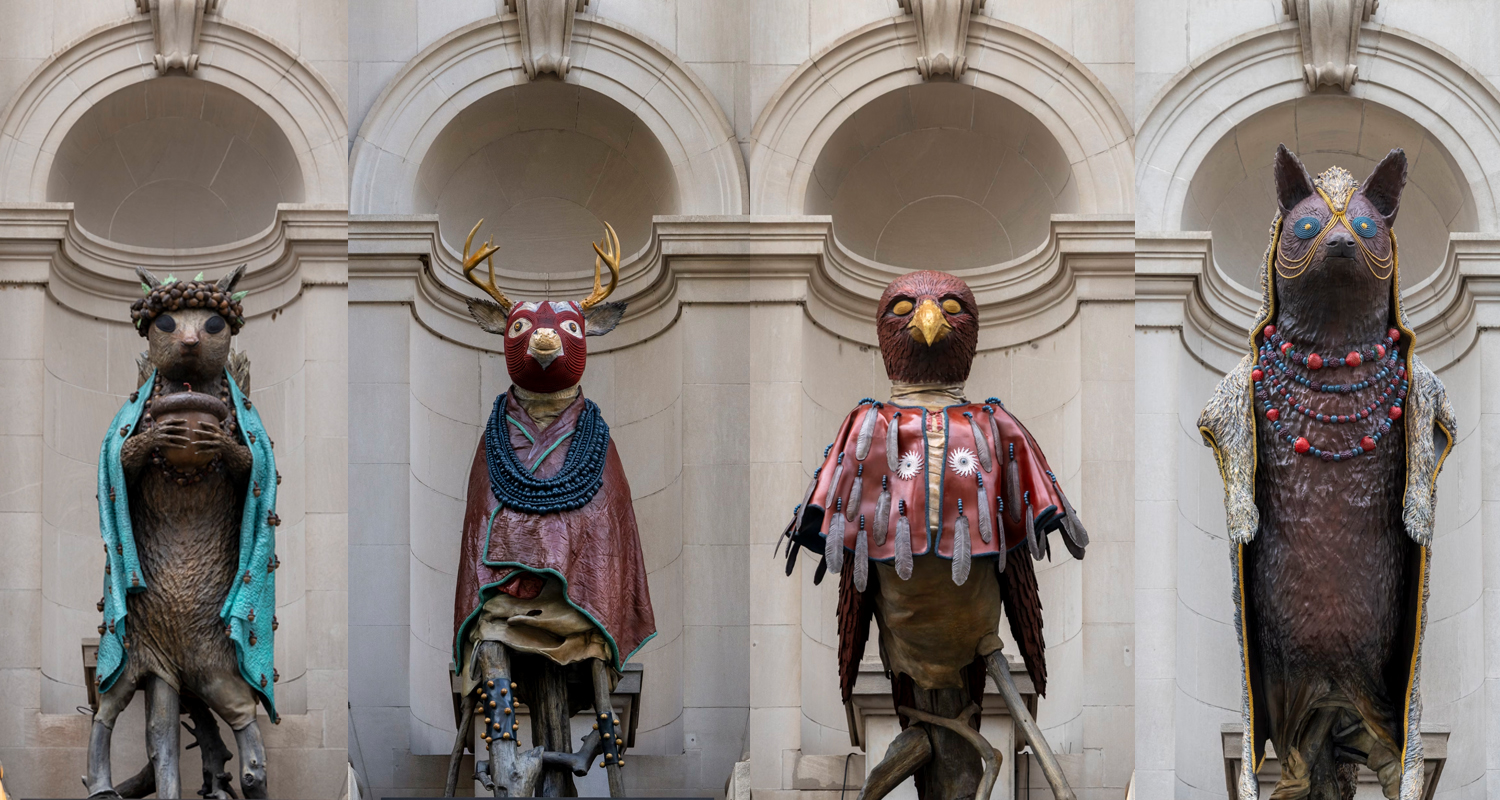
Gibson is one of the few artists ever to be commissioned to create a display for the Metropolitan Museum of Art façade, and if you’re reading this in spring 2026, you still have time to see it. The installation is on view through June 9, 2026. Titled “The Animal That Therefore I Am,”takes its title from Jacques Derrida’s 2002 book about the implications of mankind’s tendency to keep pets indoors. He collected driftwood along the Hudson River that he wrapped in animal hides which were ultimately cast in bronze. The four figures are animals he frequently sees near his home—a squirrel, a deer, a hawk and a coyote.
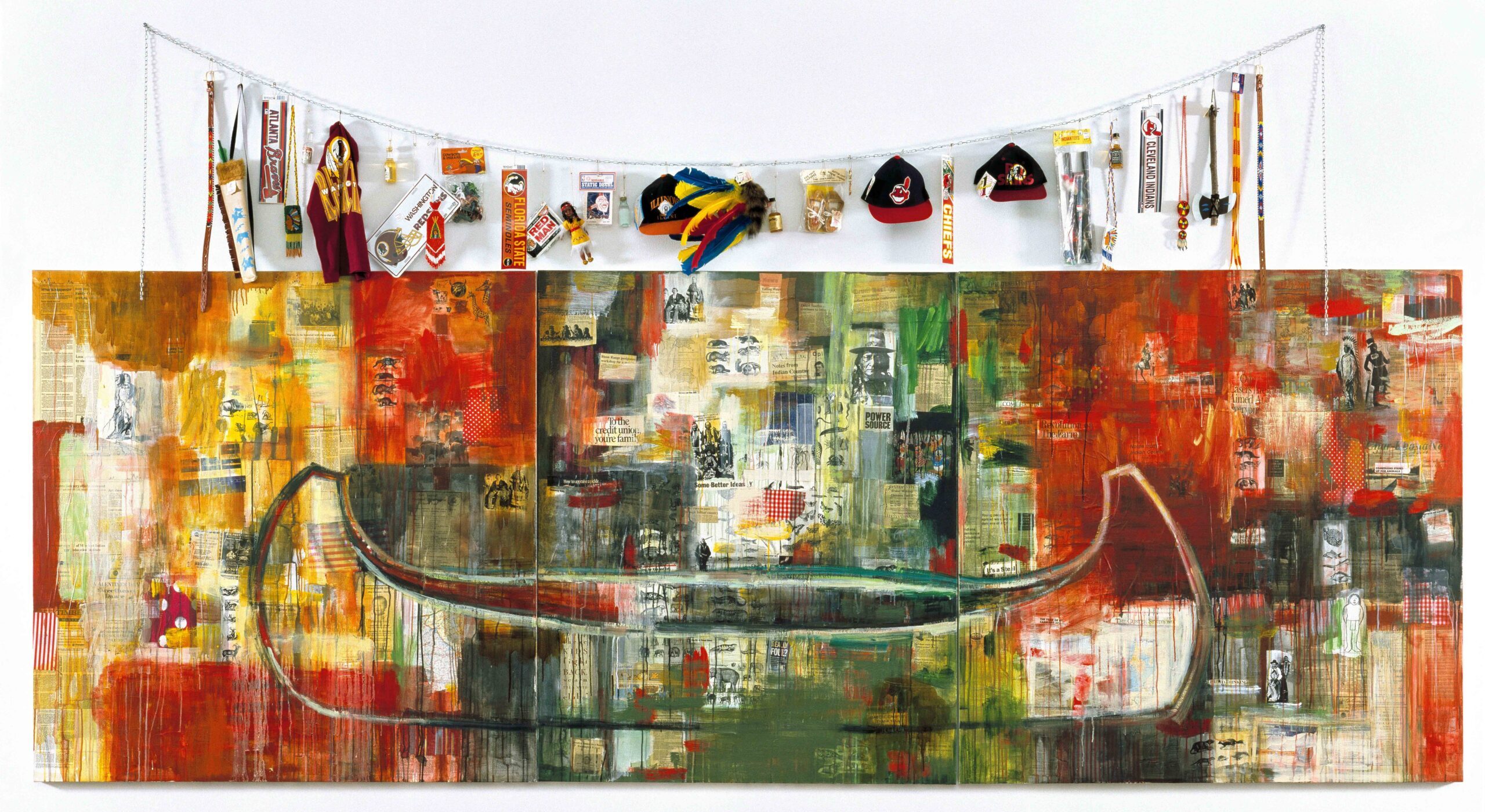
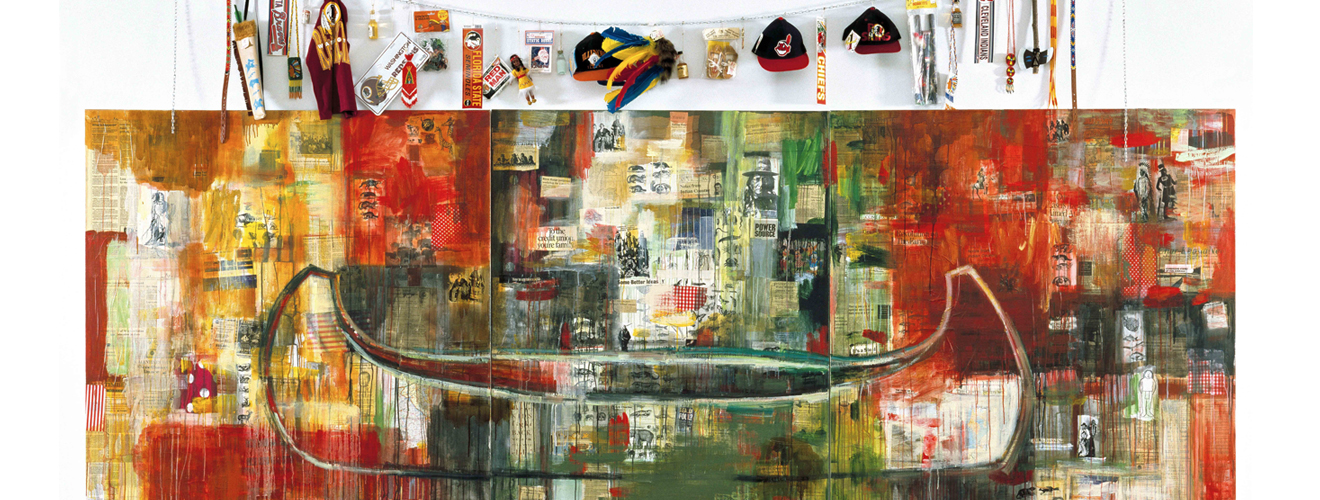
Jaune Quick-to-See Smith was an enrolled citizen of the Confederated Salish and Kootenai Tribes and was also of Métis and Shoshone descent. She passed away in January 2025, leaving behind a body of work that remains as poignant as ever. An educator, storyteller, art advocate, and political activist, her work explored American Indian identity, oppression and environmental issues. She often used humor to help the viewer receive difficult messages. Gifts for Trading Land with White People is a painting of a canoe with trinkets that co-opted American Indian identities like “Cleveland Indians,” “Washington Redskins” and “Redman Tobacco.”
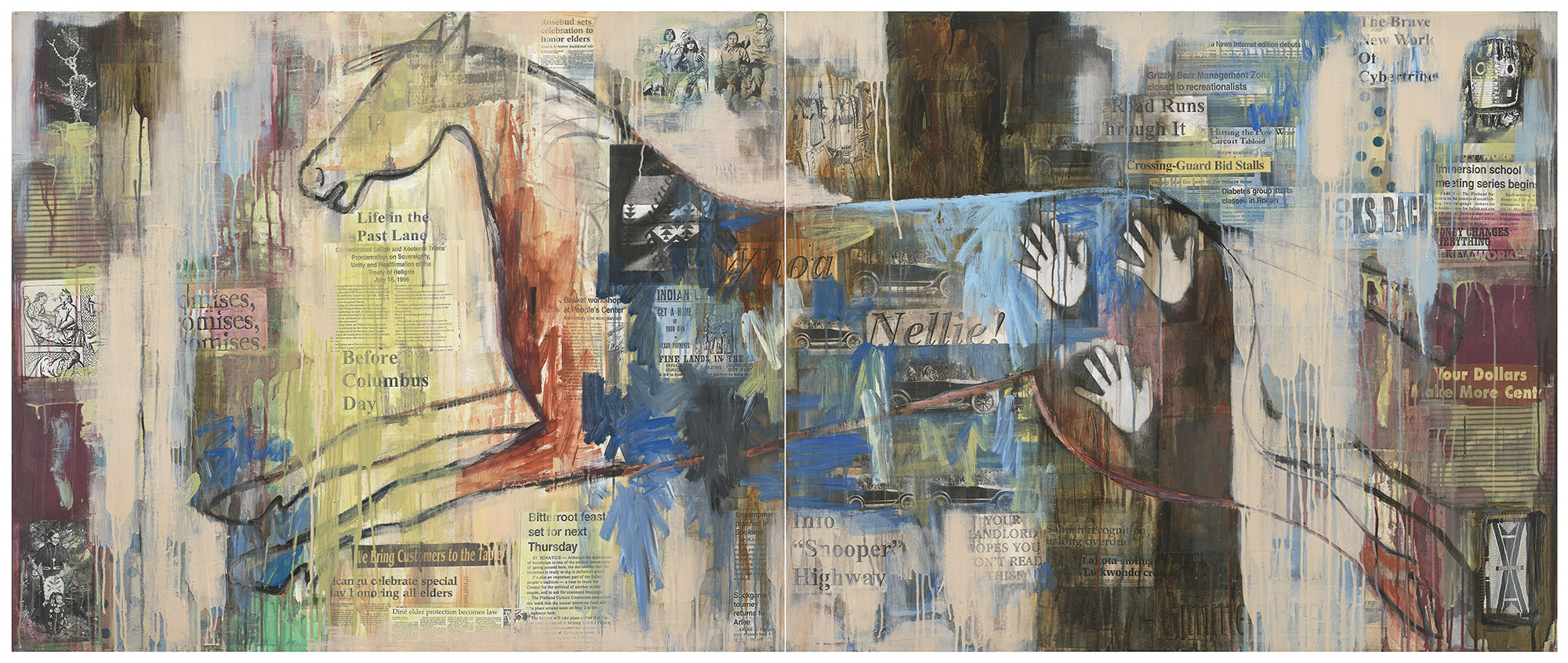
In “See Red: Going Forward, Looking Back,” she shows the figure of a horse galloping left or backwards against newspaper articles that misrepresent American Indians and their heritage.
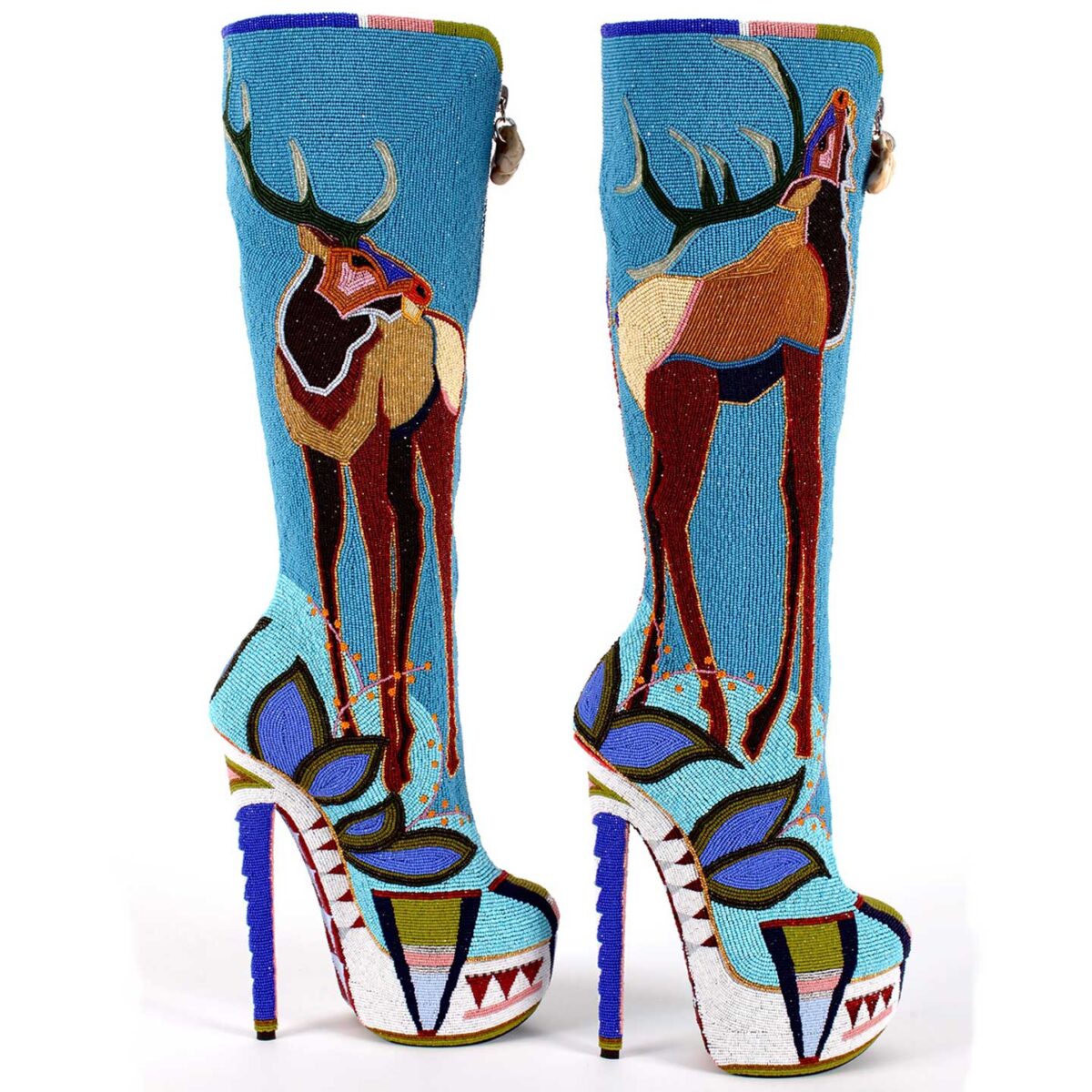
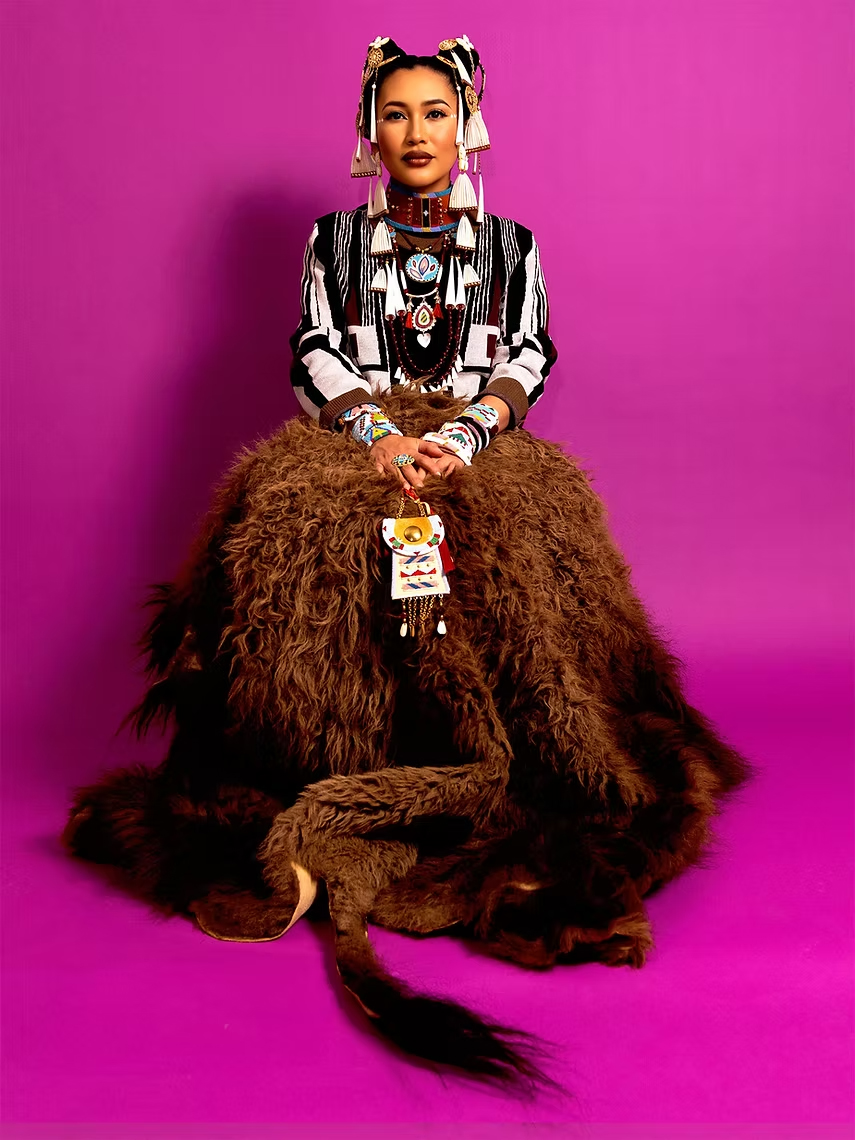
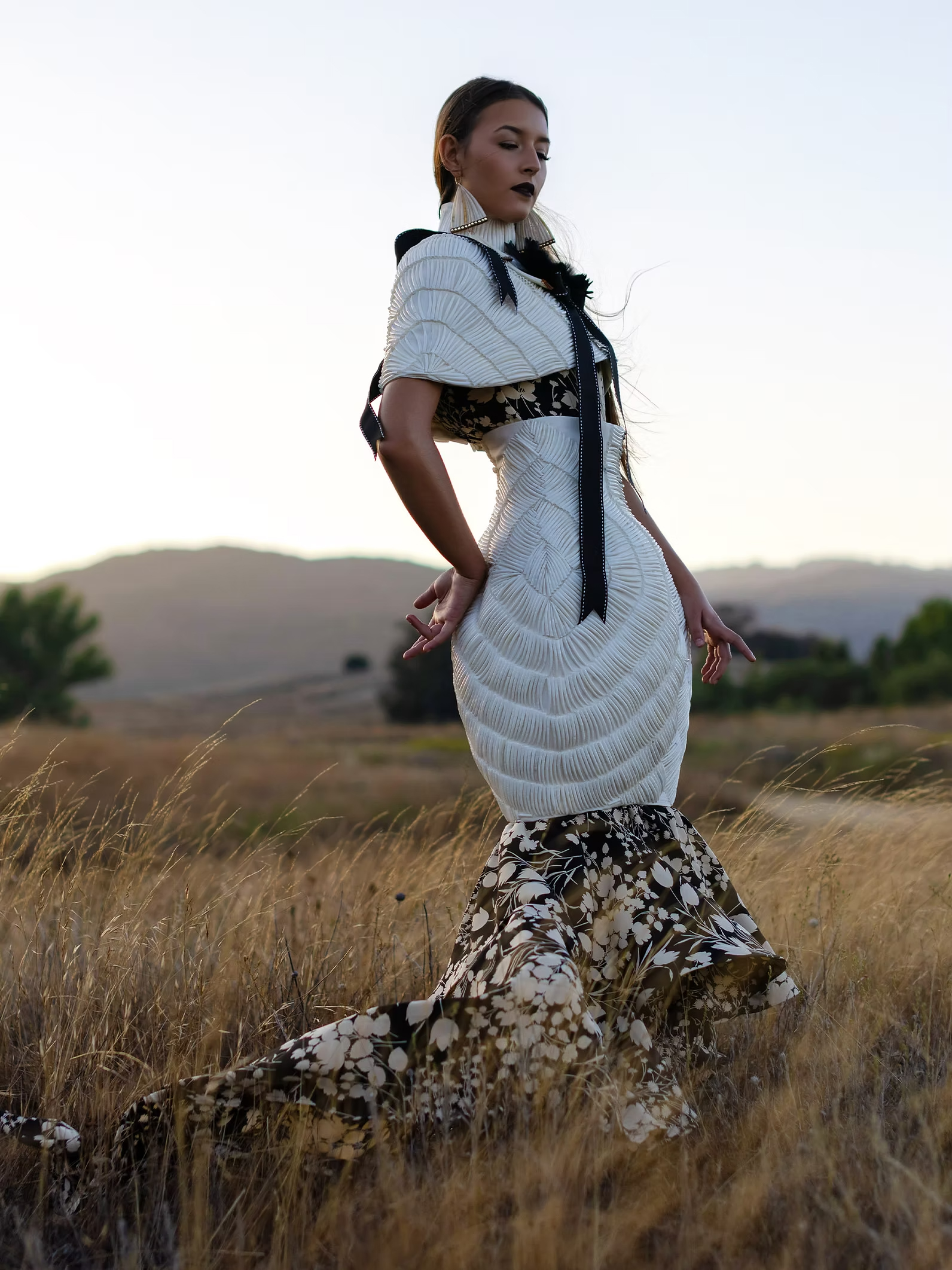
Jamie Okuma is a Luiseno, Shoshone-Bannock, Wailaki, and Okinawan who is also an enrolled member of the La Jolla band of Indians in Southern California where she lives and works. She’s primarily known for creating one-of-a-kind, couture fashion designs by hand using beads, fabrics, animal skins and other materials.
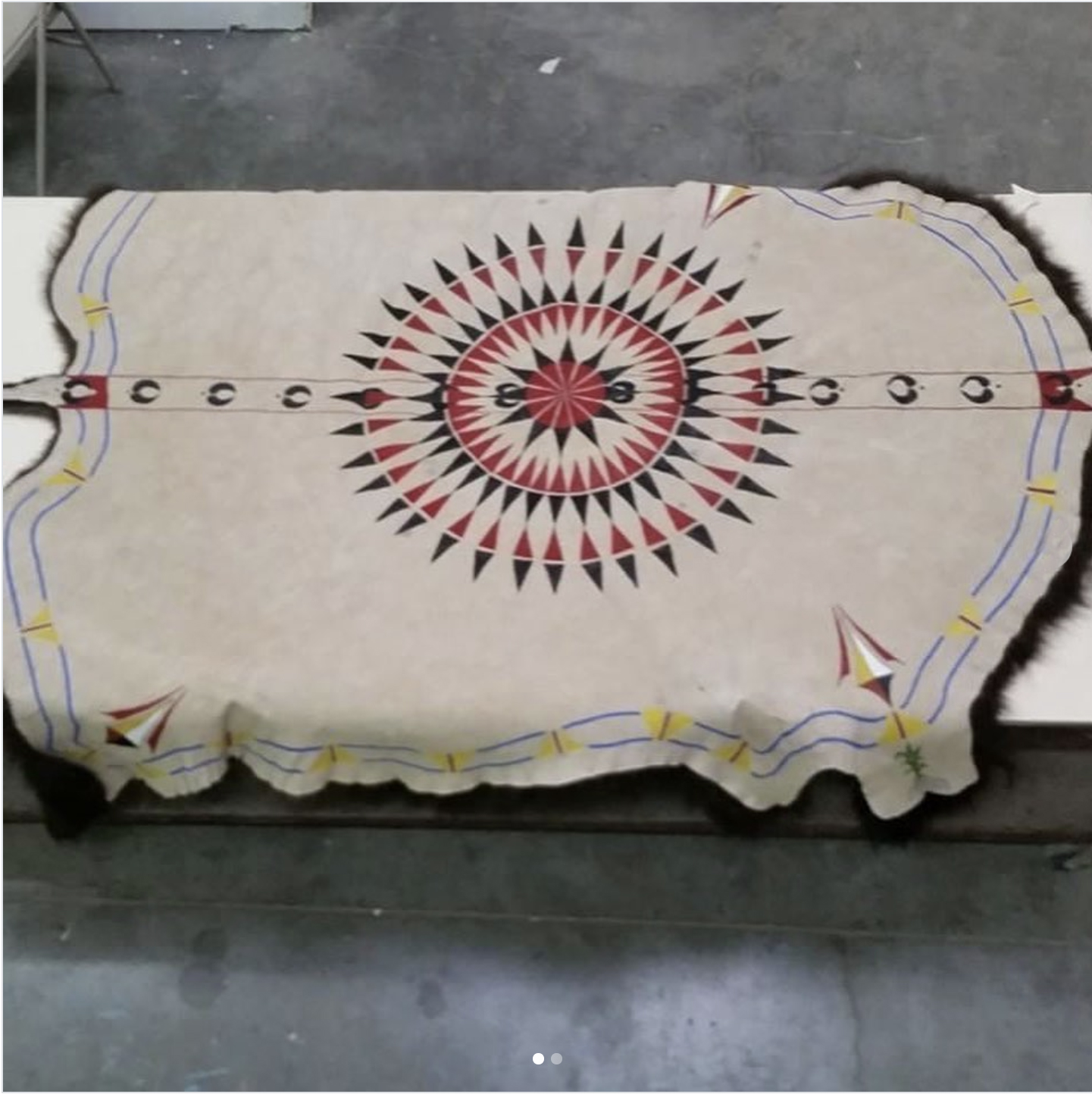
Steve Tamayo is a Sicangu Lakota artist whose family is from the Rosebud Reservation in South Dakota. In this piece titled, “Tanderup Buffalo Robe,” Tamayo used handmade paints on a traditional buffalo robe. The center starburst pattern is bisected by a trail of buffalo tracks from the head to the tail of the hide. Through the Bluebird Cultural Initiative which he founded, Tamayo leads study groups on his Reservation and travels to schools and museums throughout the country to study and teach historic methods of artifact construction and preservation. He is a frequent consultant to the Smithsonian’s National Museum of the American Indian.
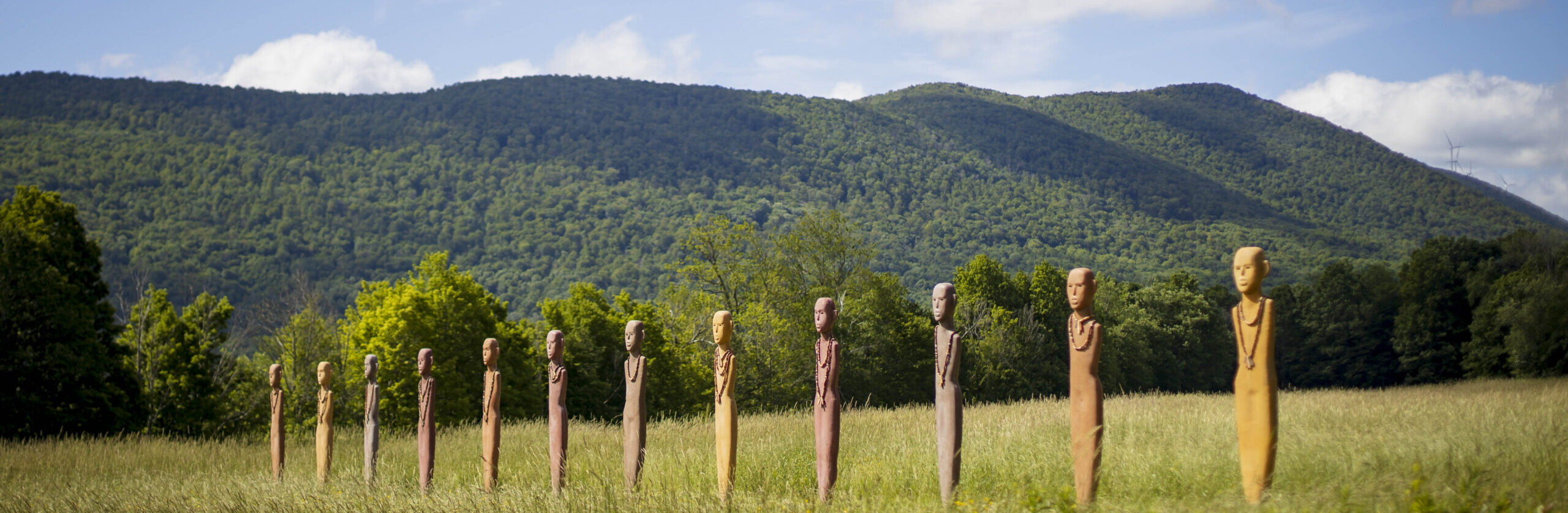
Rose B. Simpson is a mixed-media artist from Santa Clara Pueblo, New Mexico. The “Counterculture” sculptures pictured are a tribute to generations of marginalized native peoples impacted by colonization. In this installation formerly on view at The Trustees of Reservations in Williamstown, MA, twelve ten-foot tall cast-concrete figures adorned with ceramic and found objects overlooked a large field. The artist used hollow eyes to suggest that the figures are watching us and how we behave today at the same time as they’re showing respect for the land’s original inhabitants.
As we celebrate 250 years of American history this year, it’s worth sitting with the fact that the artistic traditions represented here predate that history by thousands of years. These works were never lost. They were made, used, passed down, adapted, and in many cases deliberately suppressed. What strikes me most, looking at both the ancient and the contemporary, is the continuity of intention. The materials change. The forms evolve. But the commitment to making something that carries meaning, that speaks to who we are and where we stand, never does. That feels like something worth honoring.
Beyond Appreciation
If this work resonates with you and you’d like to support Indigenous artists directly, two organizations worth knowing: Forge Project is a Native-led nonprofit in Ancram, NY right here in the Hudson Valley supporting Indigenous artists through fellowships and residencies. They also maintain one of the leading lending collections of contemporary Indigenous art in the country. The Redhawk Native American Arts Council is another local nonprofit. Founded and maintained by Native American artists and educators, the Council is dedicated to educating the general public about Native American heritage through song, dance, theater, works of art and other cultural forms of expression. Redhawk Council produces the Bear Mountain Native American Celebration annually. At the national level, the Native Arts + Cultures Foundation uses the power of arts and collaboration to strengthen Native communities across the United States. In its fifth year, their LIFT program offers emerging Native artists one-year awards to create and produce new projects.
I come to this subject as an outsider, a descendant of immigrants shaped by European traditions, with no lived experience of Indigenous culture. I’ve approached this piece with as much care and curiosity as I can bring, and I offer it in a spirit of genuine respect. If I’ve gotten something wrong or missed something important, I hope you’ll tell me. My goal is simply to shine a light on a heritage that deserves far more attention than it typically receives, and to invite others into that appreciation.
Sources
An Indigenous Present; Edited by Jeffrey Gibson and Jenelle Porter; Published by Big NDN Press and Delmonico Books, D.A.P. NY; 2023
Native North American Art; Janet C. Berlo and Ruth B. Phillips; Oxford University Press 1998